


This is the Sunday Edition of Paging Dr. Lesbian, an AI-free, self-funded, queer media project. If you’d like to support my work as a full-time journalist in an unstable industry, please consider upgrading your subscription. It will get you weekly news updates, a monthly playlist, and a free sticker.
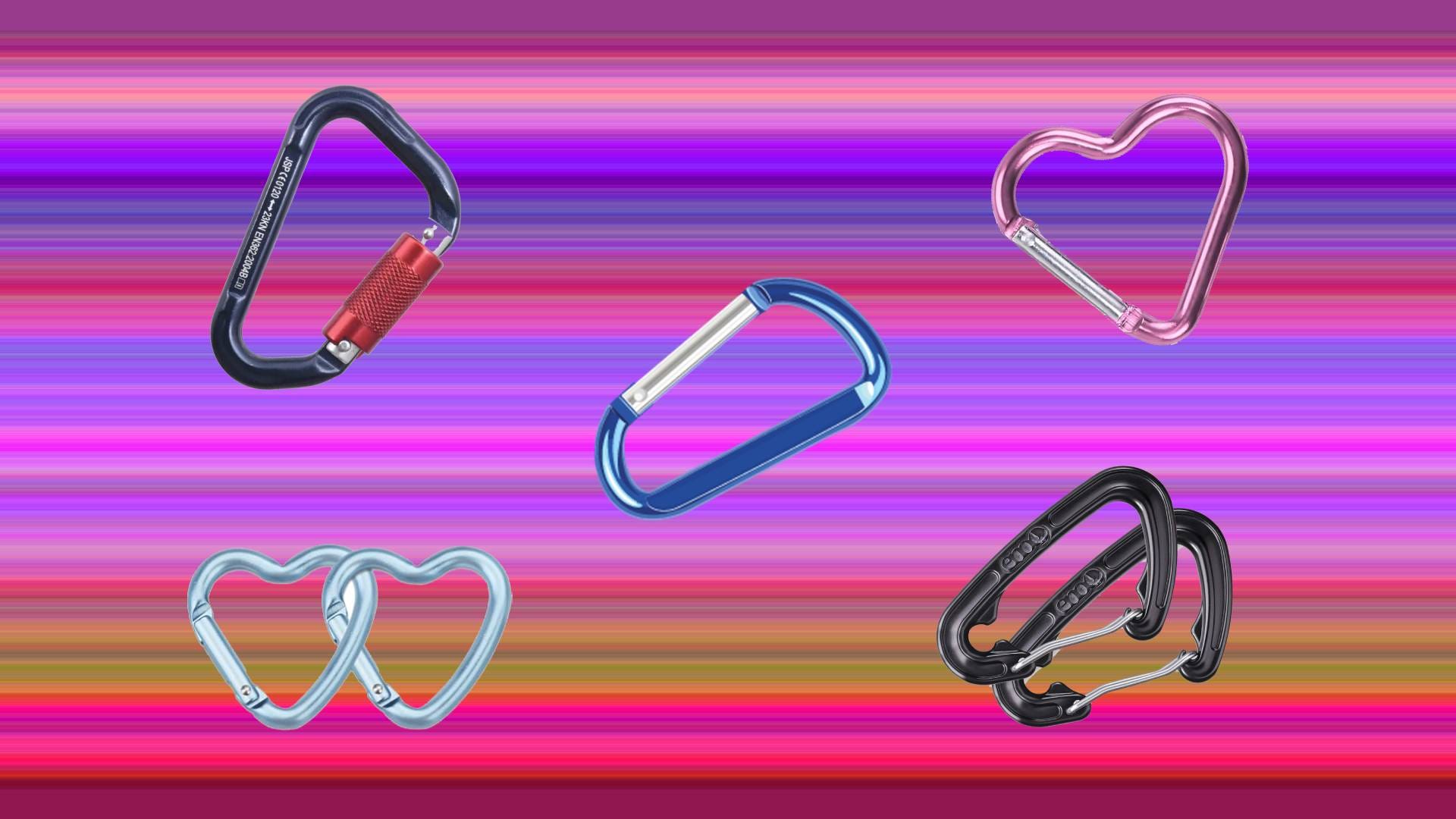
The carabiner is an enduring symbol of lesbianism, affixed to Carhartt pants and baggy Levi’s for as long as anyone can remember. But where did this evocative accessory come from? And what does it mean today?
Like many aspects of lesbian style and culture, we can trace lesbians’ use of carabiners back to the mid-20th century, when it reflected the material conditions of the working class. In the 1940s and 1950s, many butch lesbians worked blue-collar jobs involving manual labor. This was the result of both the opening up of factory positions during WWII and the appeal of jobs that weren’t overtly feminine. As Christina Cauterucci writes in Slate, “without strict dress codes, women who worked as custodians, postal workers, and mechanics could stretch the boundaries of accepted gender presentations. They also needed easily accessible keys.”
Thus, carabiners emerged as a practical accessory for a portion of the lesbian workforce, one that was implicitly sanctioned by the gender-bending nature of their employment. This was an era in which butch and femme relationships were more than aesthetic choices; they were also economic imperatives, giving lesbian couples the means to pay their bills without the assistance of a man. Much of lesbian fashion, including carabeners, is at least partially the result of economic conditions.
What began as a functional adornment soon gained coded cultural connotations. For some, particularly those involved in the BDSM community, it became a symbol of “flagging,” indicating one’s sexual preference based on how it was worn. Wearing a carabiner on the left side means you’re a top, and on the right side means you’re a bottom. It’s often theorized, based on a gossipy piece in The Village Voice, that this carabiner code actually pre-dates the hanky code, in which gay men slip color-coded bandanas into their back pockets to communicate their sexual tastes.
Carabiners have since become a broader visual marker of lesbianism. In her excellent blog Dressing Dykes, Eleanor Medhurst writes that “clothes are an extension of the lesbian self, a conscious display (or, perhaps, a conscious veil). Because of this, the true question is not ‘what does a lesbian look like?’ but ‘what clothing is a lesbian signal?’” Carabiners have become lesbian signals, conveying unspoken messages. They have also aided in community formation. As Callen Zimmerman writes in Getting Located: Queer Semiotics in Dress, these fashion choices and aesthetic codes worked to “create an authentic lesbian sexuality appropriate to the flourishing of an independent lesbian culture.”
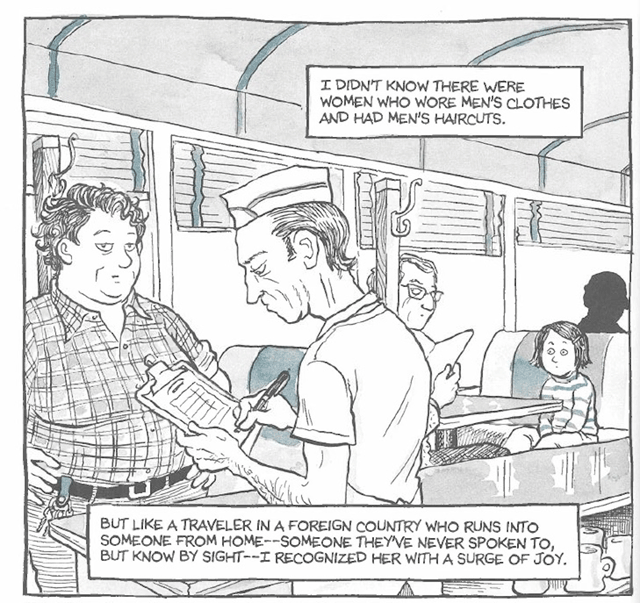
Receiving these cultural messages can be impactful. In the 21st century, one of the most memorable carabiner references comes from Alison Bechdel’s 2006 graphic memoir Fun Home and the accompanying musical. In the memoir, she describes a powerful moment of recognition when, as a child, she sees a butch lesbian wearing a key ring in a diner. In the musical, this epiphanic moment becomes a song called “Ring of Keys,” in which the protagonist describes how she felt when she first recognized a lesbian in public. “[Key rings are] a phallic symbol—they’re all about potency, agency, capability,” Bechdel told Slate.
Though this history of carabiners isn’t widely known, the symbol has maintained its potency. Popular lesbian or lesbian-adjacent musical artists like MUNA, Towa Bird, and Sleater-Kinney have sold carabiners as merch, explicitly making these coded connections. Today, many associate carabiners with rock climbing, an activity popular amongst lesbians and bisexuals. While this connection doesn’t reflect the object’s cultural origins, it represents yet another instance of subcultural resonance.
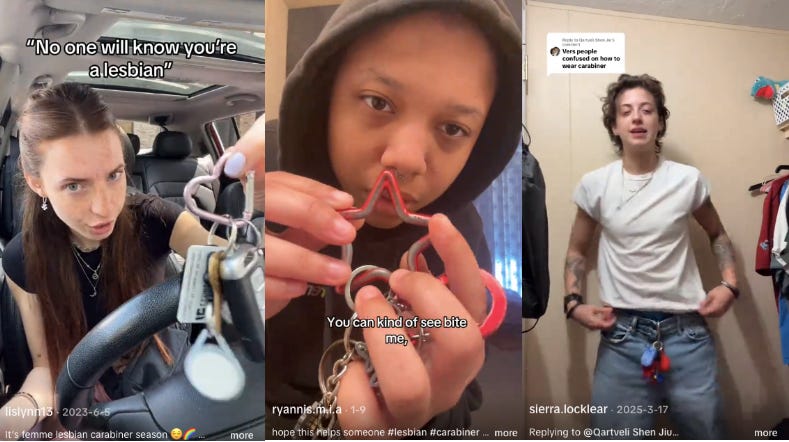
This symbol is so powerful that it has persisted for several decades, even entering into the style codes of today’s Gen Z lesbians. The accessorized carabiner has taken on a new life on TikTok, where young adults are proudly showing off their gear. In particular, the femme carabiner has really taken off, including pink, heart-shaped carabiners. “POV: you’re a femme lesbian who wants to signal other gays without changing how you dress,” reads the text on a video depicting a lesbian with a carabiner clipped to her purse. “Wanted a way to signal that im lesbian so i a got a carabiner,” says a TikToker showing us her carabiner with a pink Tamagochi and lip gloss attached to it. Another user sells carabiners with charms on them, while others have used carabiners as a starting point for crafting projects.
Some younger folks have discovered the history of lesbian flagging via these TikTok videos. One popular lesbian TikToker with 1.7 million followers made a video referencing the carabiner hanky code, joking that you can hook the carabiner directly in the middle of your pants if you’re “vers.” It has entered fandom spaces as well. An X user created a thread imagining which carabiners the women on The Pitt would wear based on the vibes they give off. In a chapter in Queering Desire: Lesbians, Gender, and Subjectivity, Eleanor Medhurst discusses modern-day lesbians’ nostalgic interest in our cultural histories. She asks, “How better to translate a lesbian past into the present and the personal than to use clothing, accessories, and symbolism?”
Though a fandom-brained post about carabiners may not be the cultural stewardship our lesbian ancestors would have wanted, the carabiner’s digital footprint is worth noting. As Krista Brunton writes in a 2016 New York Times article titled “Lesbians Invented Hipsters,” there was a time when lesbians started to become invisible. “Since you now all wear carabiners as key chains, we lesbians no longer have any private signals to each other. We’re all screwed, except none of us are, because we can’t find one another anymore,” she jokes (semi-seriously).
So-called lesbian style has never been more mainstream than it is today (apart from, perhaps, during the ‘90s grunge era), yet it’s clear the carabiner has retained its prized cultural status as a lesbian object. It has utility, it has style, and it can exist anywhere on the spectrum between subtlety and swagger. These kinds of codes, style choices, and inside jokes are precisely what make up a robust subculture. The carabiner carries even more weight than advertised.
Have you ever incorporated carabiners into your personal style? Worn them for strictly practical purposes? Let me know in the comments below.
can u see the lesbians at cannes?

who wore see-through Chanel and sneakers on the red carpet? i'll give you one guess.
that’s that on culture <3
Wait what?? Left is always top/giving with any kind of flagging, hankies or keys.
By the way when flagging emerged it was less about safety and more about noisy dark leather bars and clubs and cruising culture. In the 70s and 80s people who were flagging dressed in pretty obvious leather gear, so it wasn't about passing unnoticed.