


This is the Sunday Edition of Paging Dr. Lesbian, an AI-free, self-funded, queer media project. If you’d like to support my work as a full-time journalist in an unstable industry, please consider upgrading your subscription. It will get you weekly news updates, a monthly playlist, and a free sticker.
I’m having a SALE: get 33% off for a year if you upgrade your subscription in July.

Hayley Kiyoko’s Girls Like Girls movie feels like a feature-length music video, and that’s not a bad thing. Of course, if you’re aware of the history of the project, that description makes perfect sense. Girls Like Girls began as a song on Kiyoko’s 2015 EP, This Side of Paradise. The music video, which the singer directed, became a massive hit, garnering her a devoted fanbase and earning her the cheeky moniker “Lesbian Jesus.” Kiyoko spent years trying to turn the video into a film, and eventually published a novel of the same name in 2023, which sent the project further down the production pipeline.
Girls Like Girls follows the plot of the book and expands the world of the music video. It’s the mid-2000s, and our heroine is Coley (Maya da Costa), a teen girl who moves to Oregon to live with her father (Zach Braff, atoning for the bisexual movie he made with Évelyne Brochu) after her mother dies. She befriends popular girl Sonya (Myra Molloy), and the two form an intense bond. As Coley struggles with the grief of losing her mother and reconnecting with her dad, Sonya must reconcile who she really is with who everyone expects her to be.
The film’s plot is minimal. It’s mostly about Coley and Sonya’s internal worlds and the sacred space of that golden summer. On an emotional level, the film is very effective at getting its message across. Girls Like Girls hones in on the confusing, overwhelming parts of being a gay girl; the physical and emotional intimacy that some might brush off as a virtue of close friendship, but that feels like the precipice of something more. The acting contributes to this atmosphere. Da Costa and Molloy both give raw, effectively youthful performances that ground the film in emotional truth. The moments of awkwardness between them lend themselves to the story.

Kiyoko uses all the coming-of-age tropes in the book, but it’s clear she intends to give queer viewers a chance to see themselves in this recognizable narrative. The film is fairly straightforward, but it still leaves space for emotions to speak louder than words. Notably, this is not a coming-out story, though it’s obvious the two girls are at different stages in their journey. We can surmise that Coley is aware that she’s gay and has been grappling with it for some time, while Sonya hasn’t ever allowed herself to think about it. This discrepancy is the crux of the conflict between the pair.
The film takes care to paint a distinct picture of queer first love, especially in an environment where you don’t feel safe to be yourself. The pain of being closeted simmers just beneath the surface, particularly for Sonya, who hates herself for behaving like a coward. Still, Kiyoko always maintains sympathy for Sonya (who is based on a lost love from her youth), even as she hurts Coley.
Unsurprisingly, Girls Like Girls excels at visuals and sound. A pleasant, warm orange palette ties the look together. The mid-2000s aesthetic shines through in every scene but never feels forced, and even aids in the storytelling. Coley and Sonya’s communication via AIM messaging works to build a tenuous connection between them but also emphasizes Coley’s isolation as she sits in her room, staring at her desktop computer, waiting for Sonya to come online.
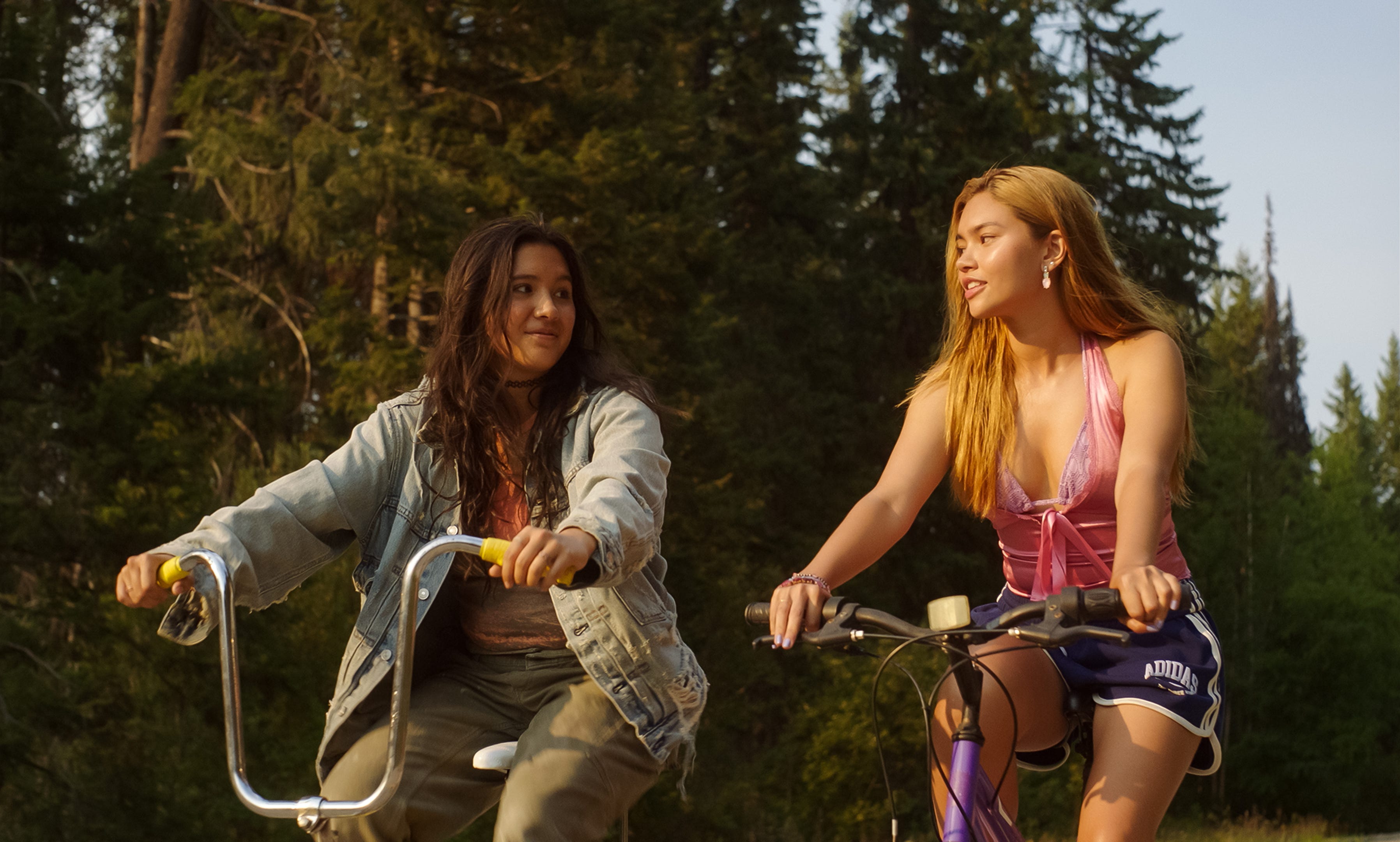
The soundtrack delivers the goods. It includes original songs from Kiyoko and collaborators like Tegan & Sara and August Ponthier. This is some of the best music we’ve heard from the singer, and it helps set the hazy tone of the film. Needle drops also play an important role. One scene involving a particular Imogen Heap song is one of my favorite moments in the entire movie, and it soundtracks Coley’s burgeoning feelings beautifully.
Most of the beats of the music video are preserved, save for a memorable violent outburst, which aligns with the film’s mellow tone. However, an important note: it’s imperative that you stay for the post-credits scene, which turns a fairly abrupt ending into one with a more emotional climax. For fans of the music video, it’s a satisfying conclusion.
Seeing Girls Like Girls in the theater, and watching viewers cheer at the end, it’s clear that Kiyoko was successful in her mission to give folks a movie she wished she had seen when she was growing up. To put it another way — Kiyoko’s dream of witnessing her own story reflected on the big screen will surely impact others who long to be seen.
