

Katherine Hepburn's 'Sylvia Scarlett' Is A Queer Failure
But not for the reasons you might think

This is the Sunday Edition of Paging Dr. Lesbian, an AI-free, self-funded, queer media project. If you’d like to support my work as a full-time journalist in an increasingly unstable industry, please consider upgrading your subscription. It will get you weekly news updates, a monthly playlist, and a free sticker.
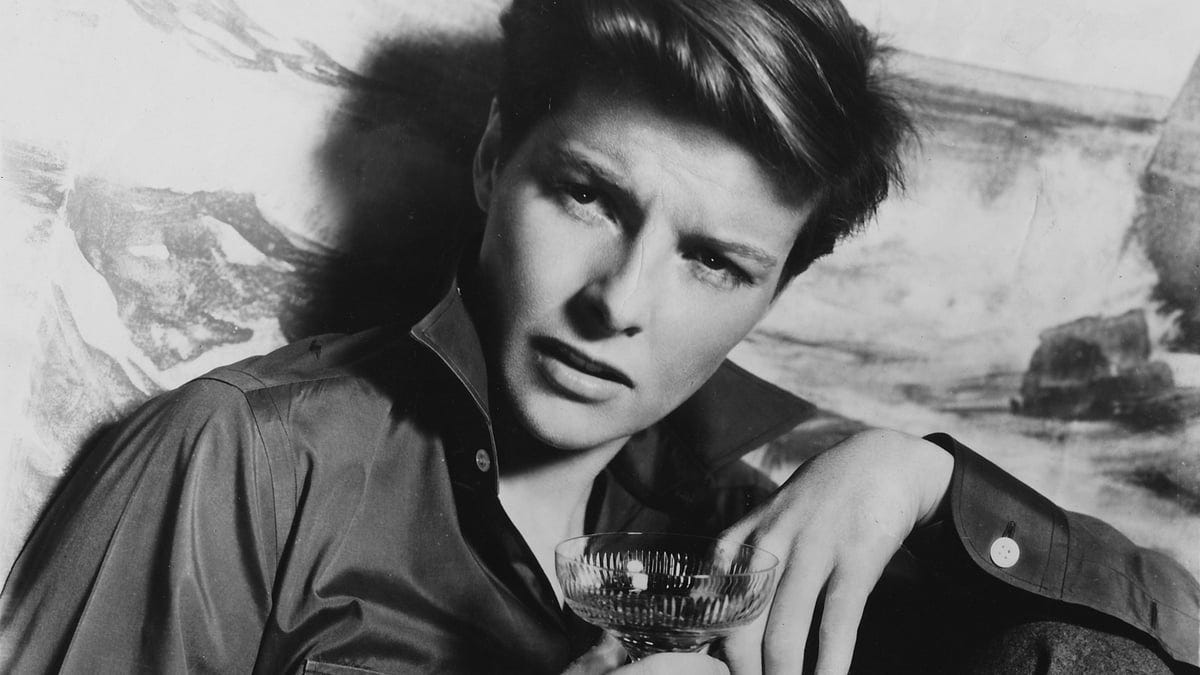
Despite the homophobic and transphobic environments in which many of them were produced, the cross-dressing film is a mainstay of American cinema. She’s the Man, Yentil, Mulan, and Some Like It Hot are a few popular examples of the medium’s interest in the cross-dressing farce. Genre differences aside, these films tend to follow a similar plot, in which anomalies that arise due to gender-bending are smoothed over, and heterosexuality is affirmed (to varying degrees of believability). The 1935 film Sylvia Scarlett stands out not because it flouts these conventions, exactly, but because it tries to follow them – and fails. The film’s characters bring up questions that the film is unable or unwilling to answer. While this is true to some degree in most cross-dressing films, Sylvia Scarlett emerges as a particularly queer failure.
Sylvia Scarlett stars Katherine Hepburn and Cary Grant in their first of four collaborations. It was directed by George Cukor, one of ten movies he made with Hepburn (following the 1933 hit Little Women). Hepburn and Grant starred in the film before they had really become the stars we know them as today — Grant hadn’t yet perfected his Cary Grant persona, and Hepburn was just beginning to set the world on fire. Notably, Cukor was a gay man, and Grant and Hepburn have long been rumoured to be queer, which only adds to the film’s queer resonances. (The trio’s second collaboration, Holiday, is their best, and is also very queer.)
Sylvia Scarlett starts with a prologue that was added after the fact. The film’s original screenwriter, John Collier, wanted to begin the film with Hepburn’s character already masquerading as a man, but studio execs balked at this radical idea, so Cukor added the shmaltzy prologue and inexplicable ending. We meet Sylvia (Hepburn) and her father, Henry (Edmund Gwenn), following the death of Sylvia’s mother. Henry has gambled away all of their money, and decides to travel from Marseilles to London, smuggling an expensive piece of lace in his suit. Sylvia insists on going with him, and resolves to pose as Henry’s imaginary son, Sylvester, so as not to arouse suspicion. She chops off her long braids, coifs her hair, dons a suit, and we’re off. Before we continue, know this: Katherine Hepburn looks very, very good dressed as a young man. She has an appealing Peter Pan air to her, and her floppy hair and boyish demeanor recall a young Leonardo DiCaprio, maybe even James Dean.
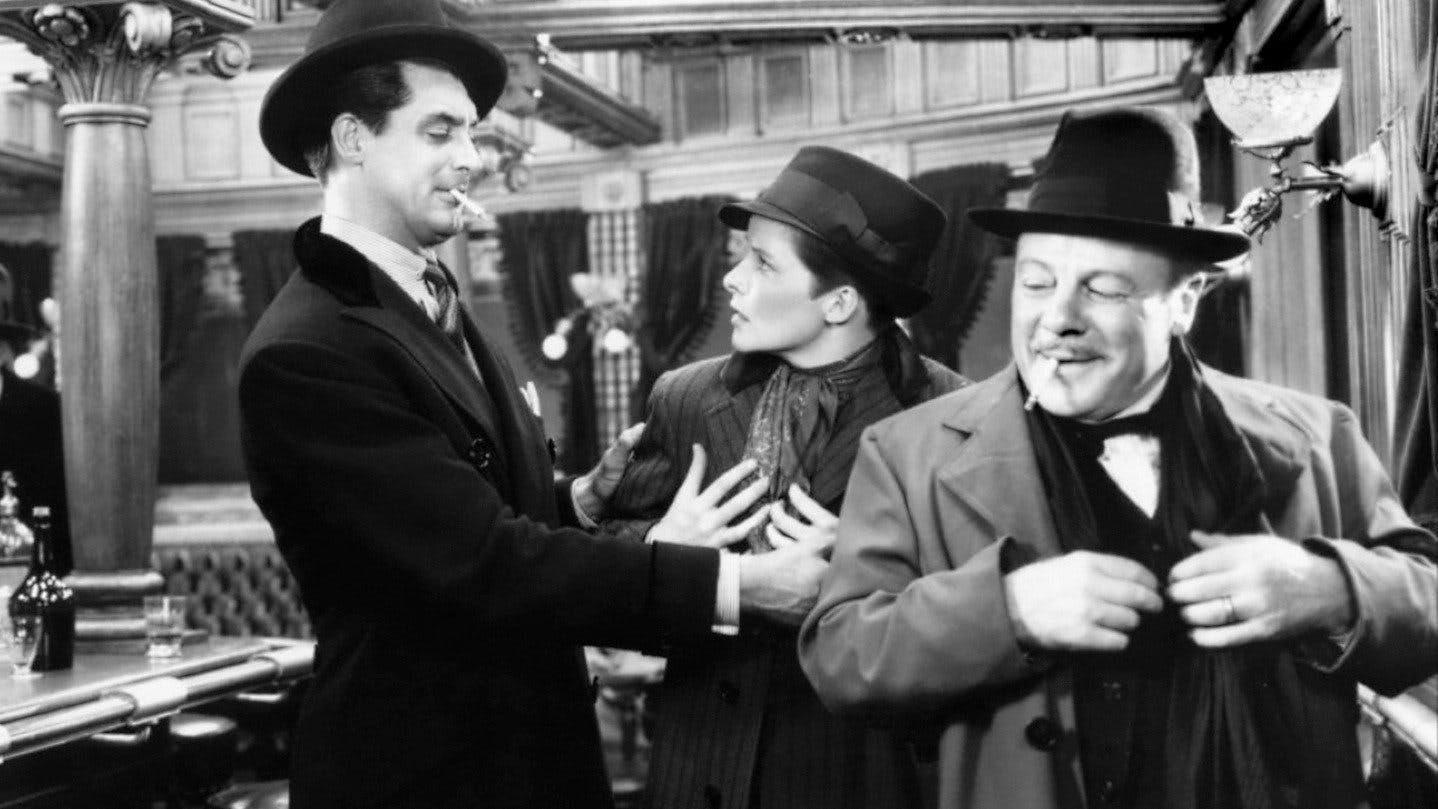
Despite the assistance of his new hot son, Henry’s plan goes awry when a charming conman with a cockney accent, Jimmy Monkley (Grant), tips off authorities. The trio work things out (after Sylvester punches Jimmy in the face, which he can do now, as a man) and begin working as scammers in London. Sylvester keeps messing up the scams, so when they meet Maudie (Dennie Moore), a maid with showbiz dreams, they decide to leave town and work as a traveling troupe of entertainers. The reasons for this are never really explained.
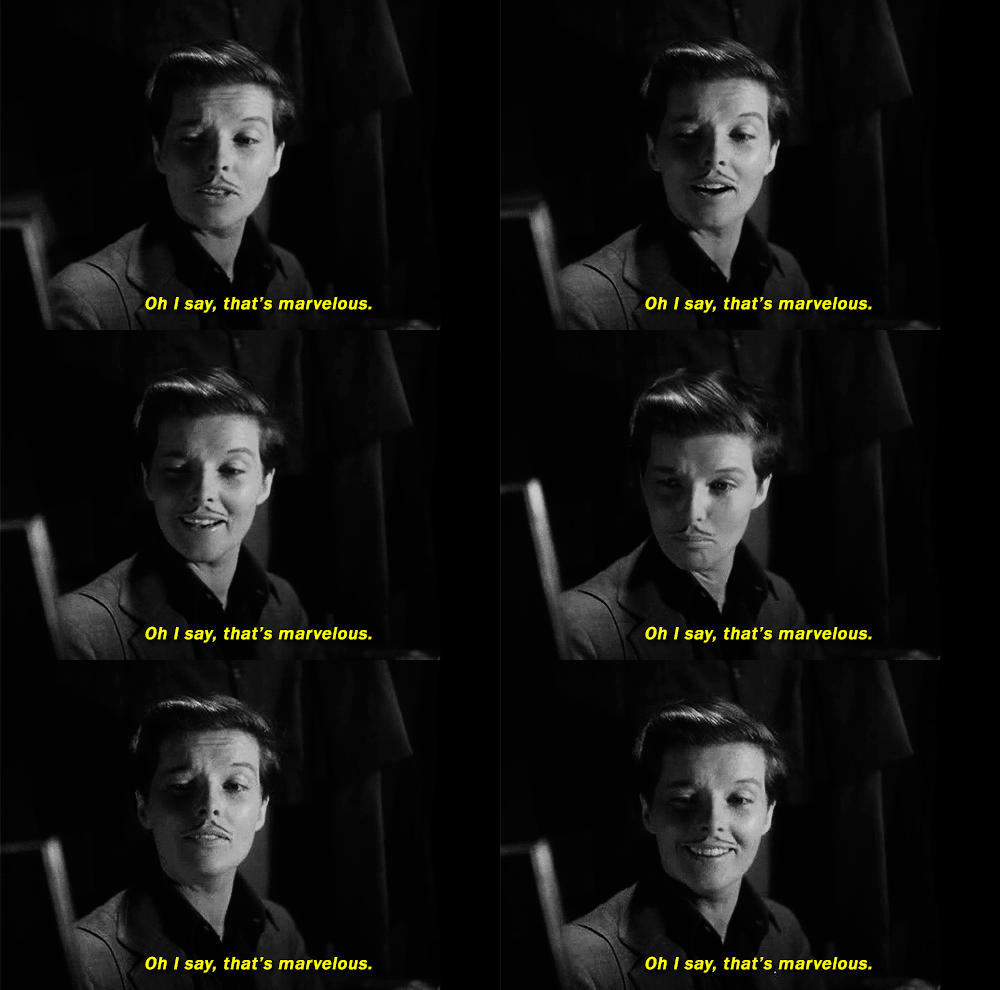
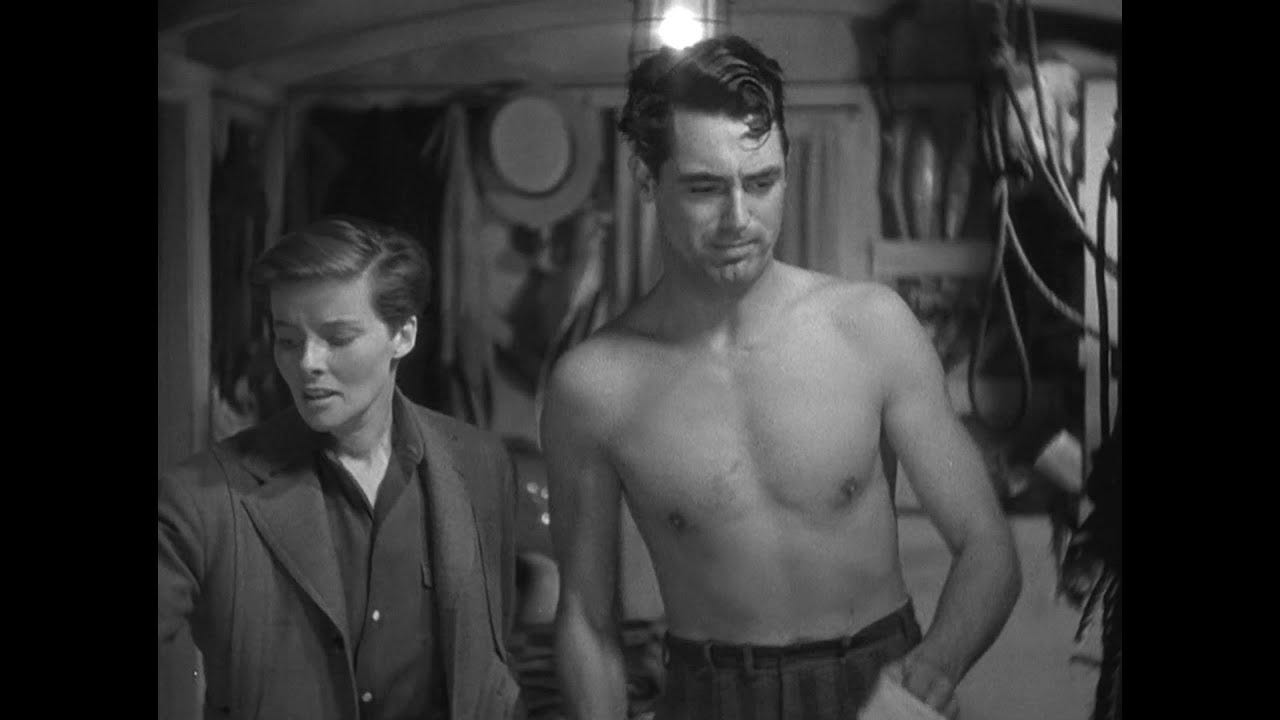
Even though it’s no longer necessary (was it ever?), Sylvester keeps up the farce, which leads to some awkward scenarios typical of the cross-dressing film. After drawing a mustache on Sylvester’s face with a pencil, Maudie plants a big kiss on his lips. Sylvester is very upset by this and flees at once. Moments later, Sylvester encounters Jimmy in his caravan and learns they’re meant to be bunking together. Jimmy takes off his shirt to reveal his very manly chest, and quips, “It’s a bit nippy tonight, you’ll make a proper hot water bottle.” Jimmy’s gay joke also freaks Sylvester out, and he vacates the caravan so fast he almost trips over his feet. It’s hard work being such a pretty boy — everyone wants you.
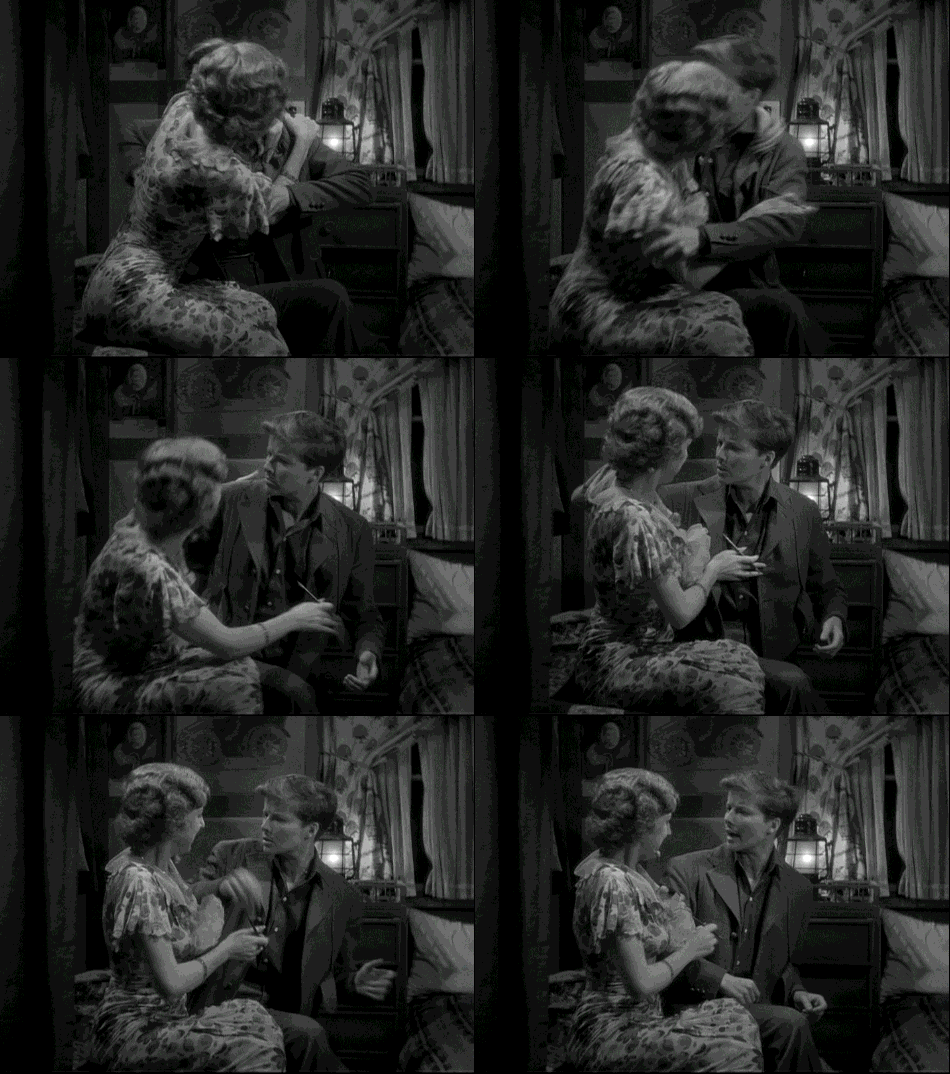
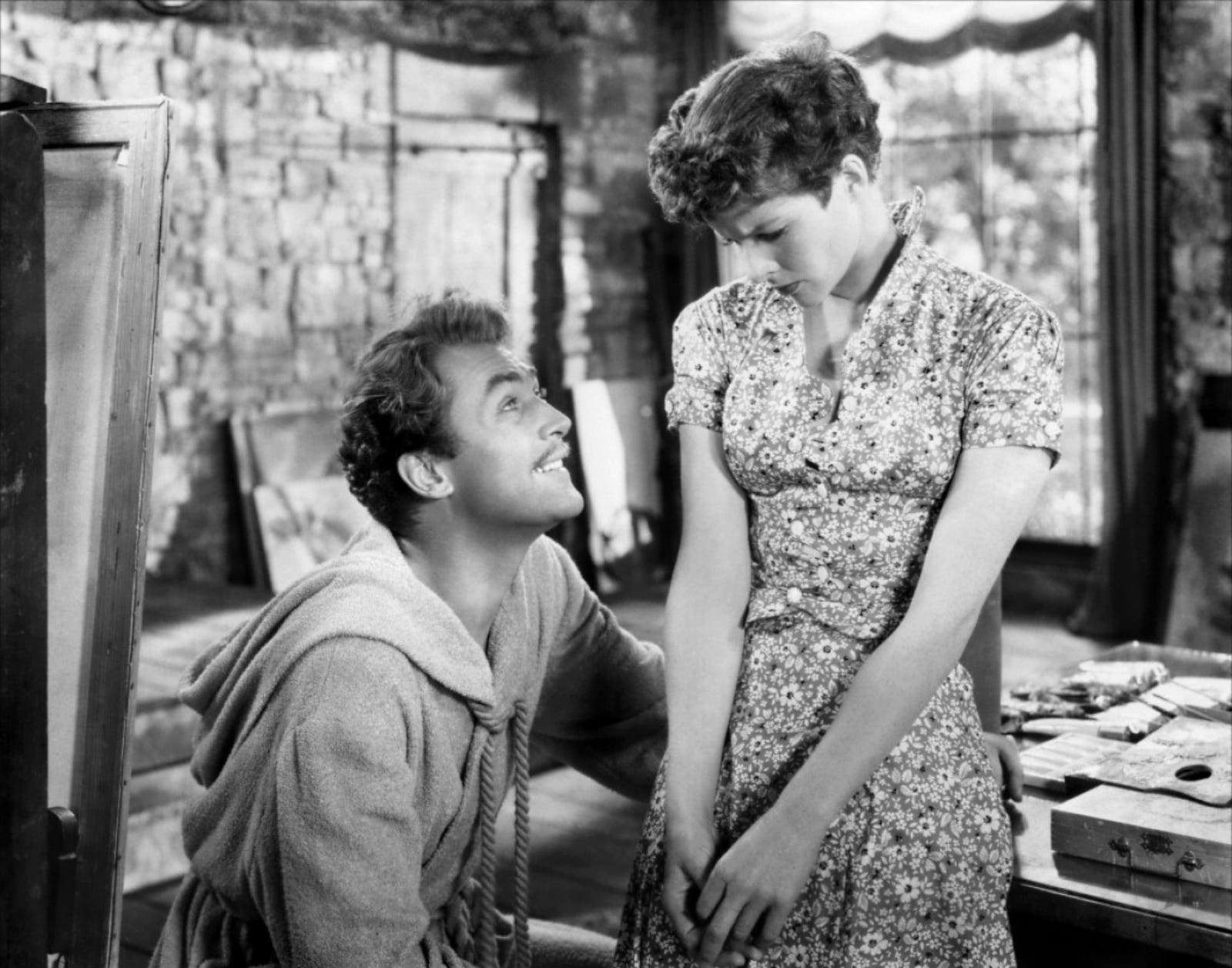
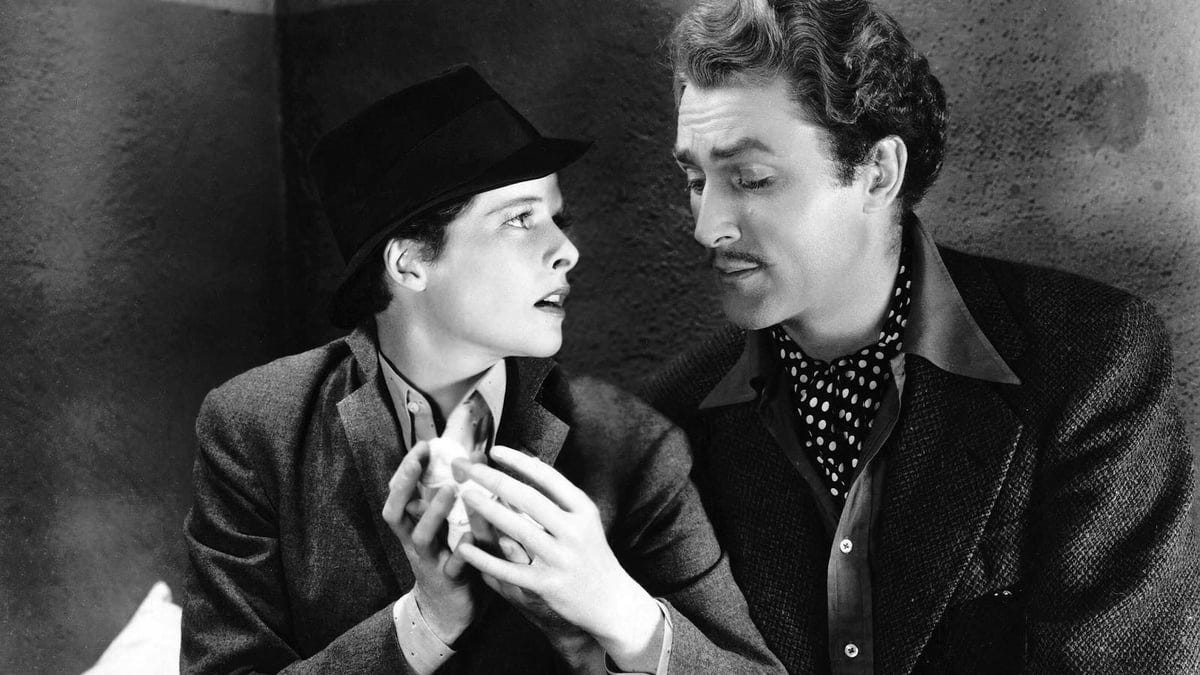
Meanwhile, a handsome painter named Michael Fane (Brian Aherne) invites the troupe to his party, and Sylvester is immediately taken with him. Michael experiences some queer feelings as well. Unfortunately, Michael’s conniving ex, Lily (Natalie Paley), some sort of Russian heiress, arrives in town and sows the seeds of chaos. But Michael and Sylvester still get to have their moment, as Sylvester literally climbs in through Michael’s window to visit him that night — very Romeo of him. Michael, still trying to work out why he’s having some gay rumblings in his tummy, proclaims, “I know what it is that gives me a queer feeling when I see you. There’s something in you to be painted.”
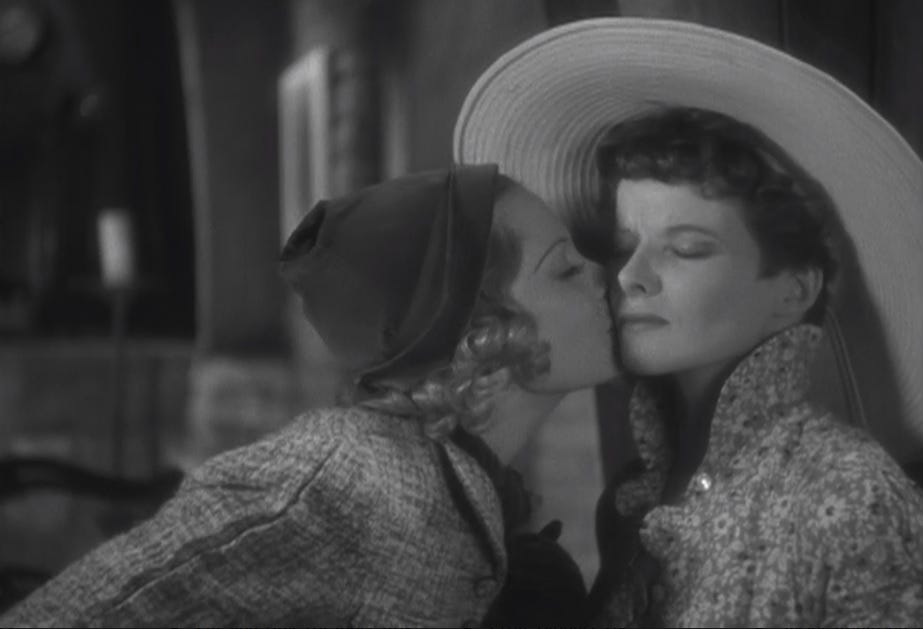
Though the plot is quite rambling, it’s a delight to watch Hepburn perform as Sylvester, and the film crashes and burns once the ruse is up. When Sylvia visits Michael in a sundress and hat she stole from some poor woman at the beach, Michael is overcome with laughter. So he’s not gay, it was all a silly lark! He makes fun of her because she doesn’t know how to act like a girl — when he tries to kiss her, she hits him instead of demurely turning her head. Despite his overjoyed reaction to her “true” gender, Michael seems less interested in Sylvia as a girl. He quickly takes Lily back when she comes knocking, ignoring Sylvia’s brokenhearted reaction. Lily, however, thinks Sylvia makes an adorable girl, and kisses her on the cheek to show her affection.
At this point, the film has an identity crisis of its own. Michael Koresky, an expert on queer cinema of the golden age, describes the tonal whiplash like this: “the film begins as something like a prestige costume melodrama before sojourning in the realm of poetic realism then diving back into screwball comedy before submerging itself abruptly into tragedy and going back to farce.” Indeed, after Sylvia leaves Michael in tears, we’re plunged into a noir, wherein two characters die by or attempt suicide following romantic disasters. When Michael and Sylvia reunite, the screwball joviality returns.
The last twenty or thirty minutes of Sylvia Scarlett are nonsensical and majorly disappointing. In a review of the film, Time wrote that “Sylvia Scarlett reveals the interesting fact that Katharine Hepburn is better looking as a boy than as a woman,” which could easily be read as an insult. Of course, contemporary queer viewers are unlikely to view this fact as a negative, but it does, in part, account for the film’s failure.
Sylvia Scarlett was a flop, losing RKO thousands of dollars and tanking Hepburn’s career, at least temporarily. Audiences at the time were unable to deal with the film’s queer elements. According to TCM, during a test screening, “when the seductive maid kissed Hepburn, three quarters of the audience walked out.” To be fair to these viewers, it’s a very confusing movie, and it still doesn’t work today – just for different reasons.
To put it simply, Hepburn is a little too convincing as Sylvester. It’s clear that she — both the character of Sylvia and Hepburn herself — has a lot of fun behaving like a boy, jumping out of windows, doing somersaults, and embodying an acrobatic, lithe manner that actually feels a little Cary Grant-ish. The freewheeling nature of the film works during these portions because Sylvester’s vagabond attitude mirrors the plot.
When Sylvester becomes Sylvia again, her girlishness seems much more of a performance than her boyhood did. While some of this is written into the script, it’s impossible not to think of Hepburn’s famously androgynous persona here. In 1981, the trousers-loving actress told Barbara Walters, “I put on pants 50 years ago and declared a sort of middle road. I have not lived as a woman. I have lived as a man.” Hepburn’s performance as Sylvia, both at the beginning of the film and the end, is off-puttingly dainty. She puts on a soft, breathy voice and makes herself small. Sylvester also appears diminutive next to a much taller Grant, but his stature is endearingly boyish, in a twinky heartthrob sort of way. When Sylvester becomes Sylvia, we immediately mourn his loss.
Consider the similarities between Sylvia Scarlett and other cross-dressing movies. She’s The Man features the typical queer diversions, as Viola-as-Sebastian (Amanda Bynes) has a crush on Duke (Channing Tatum) when she’s a boy, while Olivia (Laura Ramsey) likes a boy who’s really a girl. It all works out in the end, of course, as Duke sees Viola for who she really is and we’re reminded that Viola never wanted to be a boy at all –she just wanted to play soccer.
Sylvia Scarlett probably has more in common with Mulan, in which the title character, who had a terrible time living as a woman, becomes increasingly comfortable living as a man, and the “outing” scene is legitimately upsetting. By the end, with her mid-length haircut, there’s something a little non-binary about Mulan, and she seems to have reconciled her two gendered selves better than some of her cross-dressing contemporaries.
Billy Wilder’s Some Like It Hot has the most radical ending out of any of these films, and is basically pro-trans. Out of the two protagonists, Jack Lemon’s Daphne appears most comfortable being a woman, celebrating her engagement to millionaire Osgood (Joe E. Brown) before realizing the predicament she’s in. In the very last moment of the film, Daphne takes off her wig and says, “I’m a man,” and Osgood responds, “Well, nobody’s perfect!” Daphne’s gender farce is only revealed to her paramour in the last 15 seconds of the film, and there is no real reversal or return to normal.
In Sylvia Scarlett, Katherine Hepburn’s Sylvester is too winsome for his own good. He doesn’t get to be a sports star like in She’s The Man, or save the nation as in Mulan — he’s just a boy who wants to be loved. When the film tries to reverse the queer course it’s been set on, everything falls apart. Confusingly, the film is both very queer and quite conventional, with the latter being a consequence of the former. The movie is unable to tie up the loose threads of Sylvia/Sylvester’s gender journey, and it was a mistake to try. You can’t put the boy back in the box.
Have you seen Sylvia Scarlett? What are your favorite – or least favorite – “cross-dressing” films? Let me know in the comments below.
I'm sorry to say Sylvia Scarlett is simply a bad movie, not for the performance but the script stunk