

'We Are Pat' Gives an (In)Famous SNL Character a Trans Voice
Pat's back, and better than ever

This is the Sunday Edition of Paging Dr. Lesbian, an AI-free, self-funded, queer media project. If you’d like to support my work as a full-time journalist in an unstable industry, please consider upgrading your subscription. It will get you weekly news updates, a monthly playlist, and a free sticker.
I’m having a SALE: get 33% off for a year if you upgrade your subscription in July.
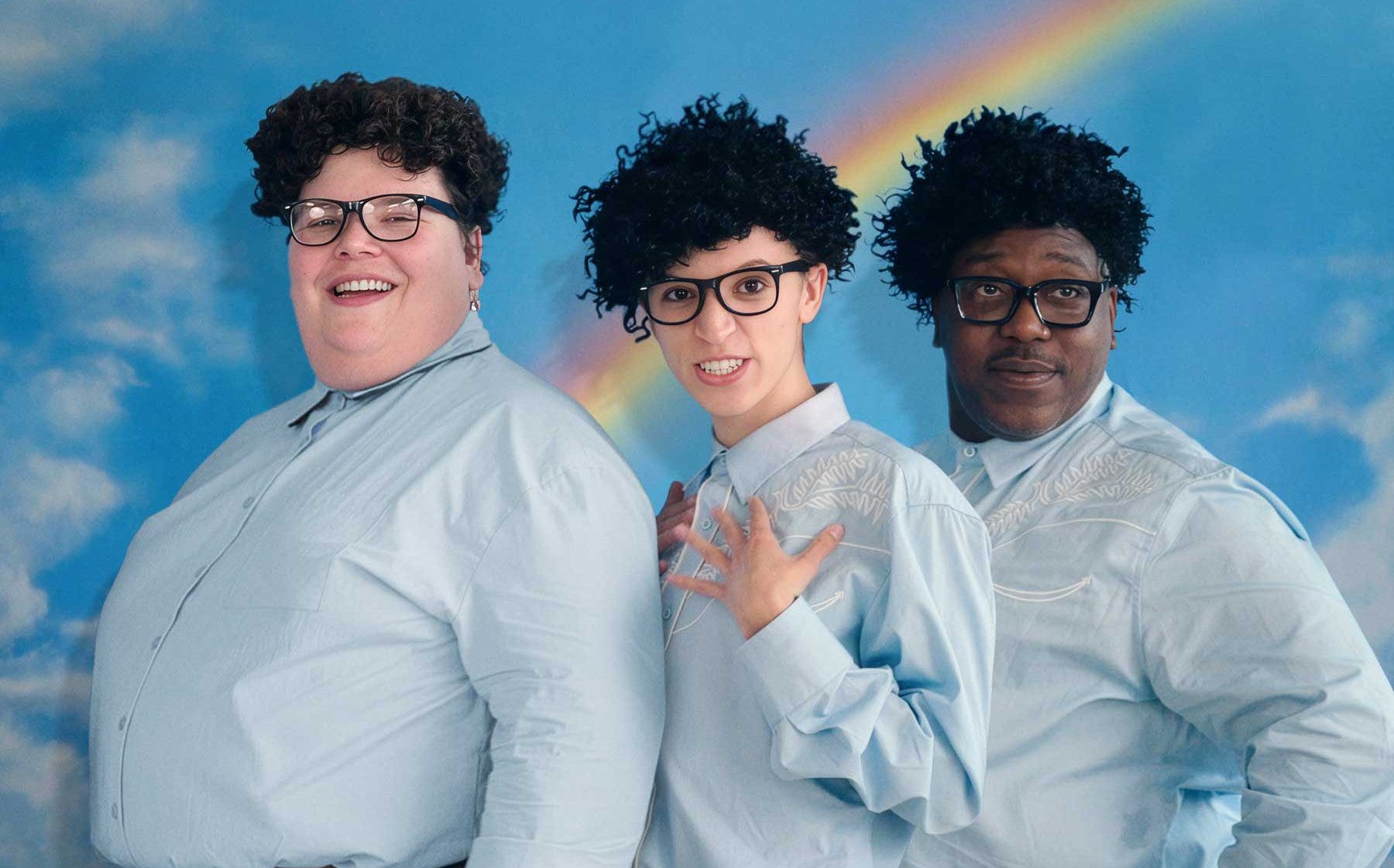
Who is Pat? What is Pat? Where did they come from? Where have they gone?
These questions may mean nothing to you, depending on your age and comedic tastes, but they mean a lot to the creators of a new documentary called We Are Pat. Directed by trans filmmaker Ro Haber, the film explores the complicated history of the SNL character Pat, created and performed by Julia Sweeney.
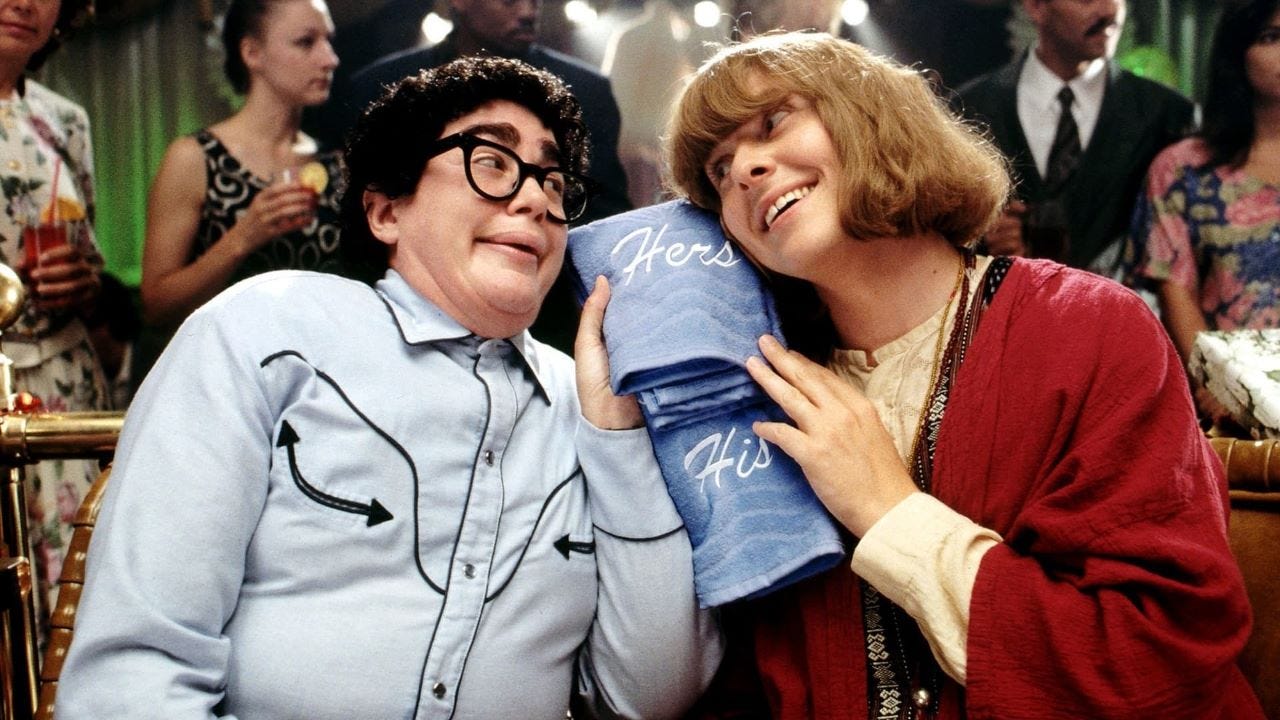
Pat first debuted on SNL in 1990, in a sketch called “Pat at the Office.” Pat is an annoying, off-putting character defined by odd mannerisms and social ineptitude. But, most notably, Pat is gender-ambiguous. Most of the skits involving Pat depict other characters trying to determine Pat’s sex and/or gender, and becoming increasingly frustrated when they can’t figure Pat out. In one sketch, a character played by Christopher Walken jumps out of a window because he’s so perplexed by the mystery of Pat’s sex. Pat’s theme song goes like this: “A ma’am or a sir / Accept him or her / For whatever it might be / It’s time for androgyny / Here comes Pat.”
Pat was an incredibly popular character at the time, appearing on T-shirts, at malls, and in an ill-fated feature film called It’s Pat in 1994. In the ‘90s, it seemed to Julia Sweeney that at least some folks in the queer community embraced Pat, as she was asked to appear as the character at various Pride events. Of course, Pat’s connection to the queer community is complicated, as they appeared on the scene before the term non-binary was popularized. In recent years, Pat’s legacy has grown contentious, as non-binary creatives like Joey Solloway have called the character transphobic.
In making the documentary, Haber set out to reckon with Pat’s legacy, and explore why the character has remained such a touchstone for them for so many years. “On one hand, I felt really fondly towards Pat...but I do think that Pat also was a little bit of, subconsciously, a cautionary tale about what would happen if you’re gender non-conforming or nonbinary or illegible to society, that people are always going to be obsessed with this one thing about you and will hound you and won’t leave you alone,” they told Entertainment Weekly.
Haber and a group of friends came together to try to answer some vexing questions about Pat. “Is it something that’s reclaimable? Is it something we can reinvent in a way that is trans? Is it even worthy of being a joke? Is it still funny?” Haber asks in the doc. The answers to these questions are more interesting and nuanced than most contemporary conversations about so-called problematic or outdated texts. As comedian River Butcher notes, “It is transphobic; it’s also funny, and Pat is a non-binary icon.” Musician JD Samson, who remembers watching Pat with her family at a young age, recalls “knowing that there was something there for me.”
As a way to consider reclaiming Pat or bringing them into the 21st century, Haber assembled a group of trans and non-binary comedians to create modern-day Pat sketches. The result is a series of funny, insightful conversations about what defines Pat as a character. Someone brings up Pat’s apparent neurodivergence and/or disability, and the comedians discuss whether or not Pat is fuckable. “I’m sure we could go in a room and figure out something,” Brontez Purnell responded when asked if he would fuck Pat.
Pat was both ahead of their time and very much of their time. In the 1990s, musicians, fashion designers, and models embodied androgyny with style and sex appeal. But for the most part, gender ambiguity wasn’t accessible to the layperson in the same way. Pat is what happens when a “normal” person has an illegible gender. When it comes down to it, the sketches are about the very real problem of gender panic.
Trans historian Jules Gill-Peterson compares the sociopolitical environment of the 1990s to that of today, noting a simultaneous uptick in visibility and backlash. In the 2020s, there has been a notable increase in trans comedy, which has gone hand in hand with increasingly transphobic legislation. Does Pat still make sense within this context? Should Pat be trans now?
The comedy of Pat is all about people’s inability to read their gender, and reading is a central thread in the documentary. JD Samson remembers realizing that she may have been reacting to Pat differently than her family. While they were laughing at Pat, she was feeling a connection to the character. Gill-Peterson calls Pat an “empty vessel” for viewers’ ideas about gender and embodiment. Purnell describes the queer and trans process of reading in between the lines of pop culture, noting “they give us so little, but we do a lot with that little.”
Though several of the participants in the documentary have criticisms of Pat, Haber’s project is ultimately an optimistic one. This work reminded me of the great theorist Eve Kosofsky Sedgwick, who defined her theory of paranoid and reparative readings in the 2002 book Touching Feeling: Affect, Pedagogy, Performativity. Sedgwick argues that paranoid readings stem from a defensive place that seeks to define a text as good or bad as a means to prevent pain. On the other hand, reparative readings welcome ambiguity and foreground hope, nourishing the self and seeking pleasure. A trans reading like the one of Pat in this film is inherently expansive, as is the concept of transness and gender ambiguity itself.
One of the most interesting parts of the film is the inclusion of Julia Sweeney, who created Pat all those years ago. Sweeney is now familiar with the criticisms of Pat, and she actually appeared as herself in Abby McEnany’s brilliant show Work In Progress, atoning for the negative impact Pat had on McEnany’s life. Sweeney explains the origins of Pat to Haber, noting that she wasn’t really thinking about gender when she created the character until she realized that’s what audiences responded to. Ultimately, Sweeney says, playing Pat was empowering for her, because it gave her a chance to escape from the gendered constraints of womanhood placed on her at SNL and in the world at large. In essence, Pat was also a part of Sweeney’s own gender journey.
We Are Pat reminded me a little bit of Chasing Chasing Amy, another documentary about potentially problematic queer text. Both films grapple with the question of authorial intent, and whether a text’s negative impact can (or should) outweigh its potential for positive impact. Haber avoids generalizations and allows Pat to embody a multitude of meanings, some of which contradict each other. For a mostly comedic look at a goofy SNL character, We Are Pat is a surprisingly nuanced film, as heartfelt as it is inquisitive. Maybe the real Pat is the friends we made along the way.
You can watch We Are Pat on Kanopy via your local library, or rent it on Apple TV+, YouTube, or Amazon Prime.

“A trans reading like the one of Pat in this film is inherently expansive, as is the concept of transness and gender ambiguity itself.” Beautiful 🏳️⚧️