


This is the Sunday Edition of Paging Dr. Lesbian. If you like this type of thing, subscribe, and share it with your friends. Upgrade your subscription for more, including weekly dispatches from the lesbian internet, monthly playlists, and a free sticker.
Before we get started, here are some places you can donate to folks in Minnesota under ICE’s siege. You can use this tool to track and report ICE sightings in your area. Here are some other things you can do. If you start a monthly subscription to this newsletter right now, I will donate the revenue from your first month to one of the organizations linked above.
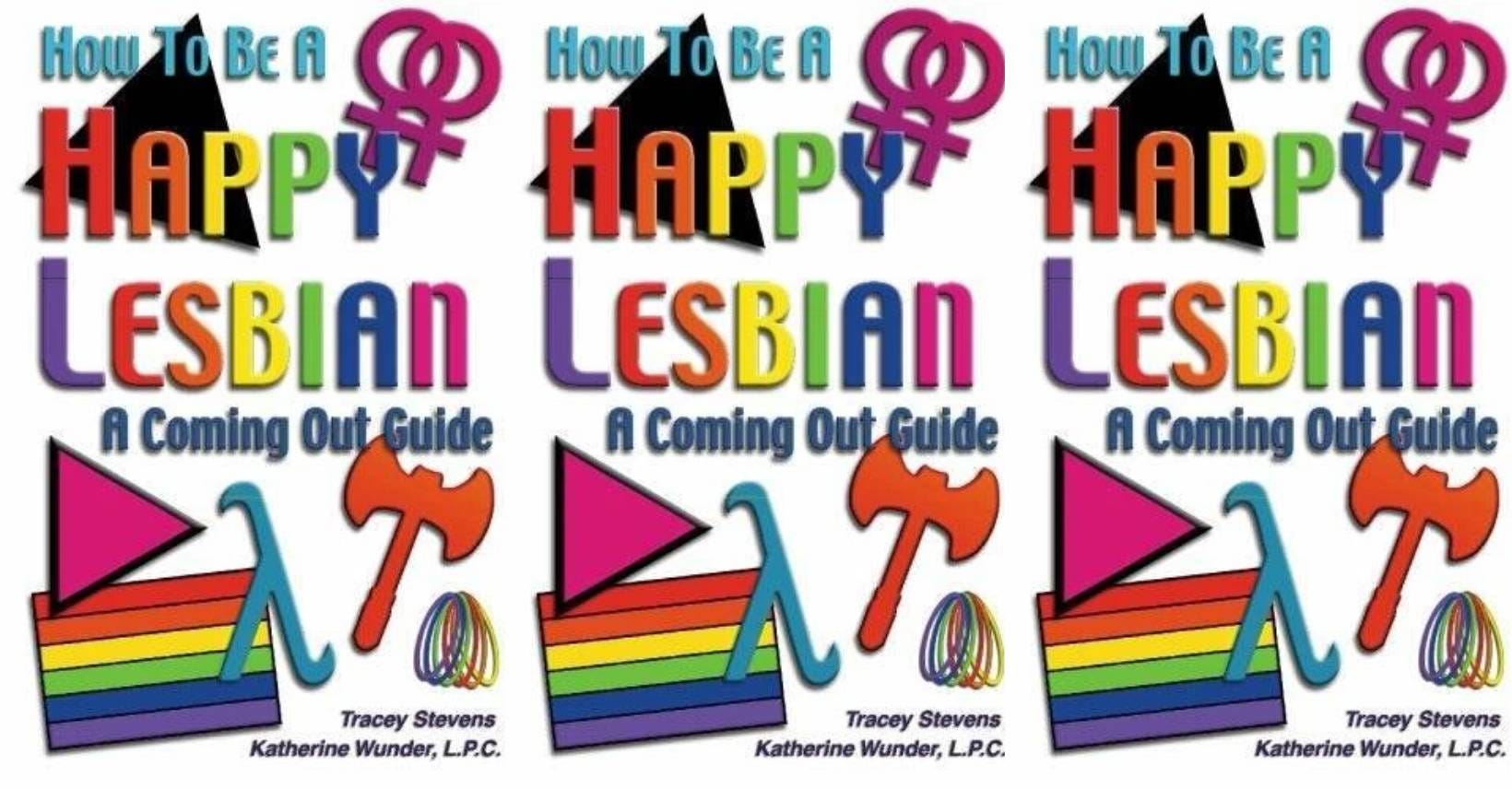
I recently acquired a copy of a book that may contain the answers many of us seek. It’s called How To Be A Happy Lesbian: A Coming Out Guide, and it was published in 2002. I was inspired to buy it based on the cover alone, and now that I’ve read it, I thought I would share what I’ve learned with you. Together, maybe we can discover the secrets of the lesbian universe.
How To Be A Happy Lesbian was written by Tracey Stevens, a novelist, and Katherine Wunder, a Licensed Professional Counselor. They are (or at least were) partners who live together in North Carolina in a house full of animals. They are also the authors of Lesbian Sex Tips: A Guide For Anyone Who Wants To Bring Pleasure To The Woman She (Or He) Loves, which features a similarly amazing cover. They thank each other in the book’s acknowledgments.
In the intro, Tracey writes, “This book is dedicated to all the lesbians, gay men, bisexuals, and transgendered people, and everyone else deemed “different” by society who are courageous enough to be who they really are; and to the straight people who are so secure with their own sexuality that they are not threatened to call us their family and friends.” She explains that she was inspired to write the book because it was the kind of thing she wished she had growing up in a homophobic environment. Essentially a self-help book for lesbians, Tracey and Katherine provide helpful tips for how to exist in the world as a lesbian.
To that end, Chapter 1 is entitled “What does it mean to be a lesbian today?” Tracey first defines the term lesbian as “women who love, cherish, and have primary relationships with other women.” She includes a section on gay slang and slurs, but suggests that you own these words instead of being hurt by them. The next section explains the magical sensation of gaydar, which she describes as “the ability to recognize another homo immediately.” Notably, the chapter ends with a guide on where to meet other lesbians. Suggestions include sporting events, places where animals are, bars and clubs, lesbian groups, the internet (though Tracey warns this can be dangerous), and everyday locales like the grocery store. (This is where gaydar comes in handy, I suppose.)
Chapter 2 is all about bodies, and provides a brief rundown of relevant anatomy. Yes, there are diagrams. Chapter 3 is a guide about how to have safe sex and includes information about STDs. Chapter 4, written by Katherine, describes strategies for healthy communication. Katherine lays out communication rules, such as don’t use shoud, could, would, and never, don’t yell, and begin by saying something positive when you want to bring up an issue with someone. She also gives advice on how to come out, suggesting that you might want to have information about local PFLAG chapters when coming out to your family.
Chapter 5 is where the magic happens. Titled “Romance and the art of making lesbian love,” the chapter begins with Tracey explaining that she once had a partner who had never orgasmed before, and when Tracey finally got her there, “the house practically rocked.” We love to hear it, Tracey. She begins with a discussion of romance, noting that this can look different from woman to woman, and then gets into foreplay techniques. Tracey then gets very specific about the next steps you should take to make things happen. In the “Moving down south” section, she imparts an important truism: “Remember ambidextrous is great but ambiSEXtrous is better!”
Next up – an explanation of different sex positions, including “The illusive and unnatural scissors” and “Sitting up – on her face.” After a brief mention of S&M, Tracey makes a somewhat jarring transition to childhood abuse and domestic abuse, noting the importance of using your creator-given gifts to overcome hardship.
Chapter 6 details strategies for “dealing with the outside world.” Tracey begins with two kinds of people you might meet out there who are bound to give you trouble. They are closet cases and MCs, which stands for people who “missed their calling,” meaning they should be gay but never got around to figuring that out for themselves. These can be some of the meanest people you’ll meet, Tracey says. The Christian Right is pretty bad too, she admits, and they’re the ones who created the concept of the Gay Agenda – an actual homophobic propaganda video distributed to government officials. If you need proof that Gay Is Okay, just look to the animal kingdom, Tracey suggests. Whether being gay is pre-destined, hereditary, or something else entirely, it’s definitely not a choice, according to Tracey.
Unfortunately, there are some negatives about being gay in the world, which is why Tracey dedicates Chapter 7 to the topic of “Living in the primarily heterosexual USA.” This chapter includes information about the rights and privileges gay people don’t have in the United States of America. She argues that it’s important to think about what we lack so we can imagine a better future for ourselves. Still, Tracey urges us to always have a positive attitude about life and be optimistic about the state of the world.
How to maintain this sense of optimism? Look for gay role models, which is the subject of Chapter 8. Tracey presents us with a list of lesbians to look up to, both contemporary and historical. The list includes figures like Susan B. Anthony, Emily Dickinson, and Melissa Etheridge. If that’s not enough to keep our spirits up, Tracey suggests we go to the movies. Chapter 9 lays out a handy guide of lesbian movies to watch, compiled by Raymond Murray, the founder and president of TLA Video. (The surprisingly extensive list includes several lesbian films I’ve never seen or never even heard of, which to me indicates how much accessibility and reach continue to be problems when it comes to lesbian cinema.) You can find an online version of the list here.
Chapter 10, which was written by Katherine, is all about therapy and counseling. She lays out what psychological institutions have to say about gays and lesbians, what to expect when going to therapy, and includes a short section detailing what counselors with gay and lesbian clients should know.
The final chapter, called “Coping with the world as a lesbian,” contains a roundup of Tracey’s favorite self-help truisms. They include: “Everyone is born with gifts,” “Love the planet,” “Don’t judge other people,” “The best revenge is success,” and “It’s not good to shove your ideas down someone else’s throat.” Tracey ties up this hodgepodge of ideas with a sincere wish for readers of the book. She writes, “I hope this book will help you on your quest to becoming a happy, healthy lesbian. This is a new millennium, full of the promise of equality for us all, and I wish you the brightest, most wonderful future you could ever imagine.”
Can we find the answers somewhere in there? How do you become a happy lesbian? Here’s what I’ve gleaned from Tracey and Katherine’s writing. Step one: You must learn how to be a lesbian and meet others like you. Then you’ve got to educate yourself about safe sex and discover how to rock a woman’s world. (Sexually and otherwise, but mostly sexually.) But make sure you know how to communicate! You know what they say – happy wife, happy life.
You also need to learn to face the world, even when it’s spewing hatred in your face. However, when things are looking bad, you need to have hope, and believe that things will get better. Have confidence in yourself! You can do this by finding lesbian role models, either throughout history or in the present day. Hollywood movies can be mean to gays and lesbians (boo), so you should go seek out indie films that depict lesbians in a positive light. You should definitely go to therapy, if you think that could help you. You should also listen to Tracey’s advice, because she’s very wise.
While parts of this book are (unintentionally?) hilarious and other aspects are outdated, much of this decades-old advice still rings true. Lesbians certainly still need help, as does everyone, and Tracey and Katherine’s book isn’t the worst place to start. Comment below if any of Tracey and Katherine’s suggestions resonated with you or made you laugh, or if you have solved the eternal quandary of how to be a happy lesbian. Please, enlighten us!

I think I remember seeing this book at LGBT centers back in the day. The cover alone was something to take note of because of the horrific graphic design.
🗣️down with Heterosexual USA