

A Lesbian Feminist Dilemma in 'A Woman Like Eve'
This 1979 Dutch film chases empowerment — with a caveat

This is the Sunday Edition of Paging Dr. Lesbian. If you like this type of thing, subscribe, and share it with your friends. Upgrade your subscription for more, including weekly dispatches from the lesbian internet, monthly playlists, and a free sticker.
Here are some places to donate to support trans people in Kansas: The Ace Foundation, The LGBTQ Foundation of Kansas, and the Trans Youth Emergency Project.

Have you ever gone on vacation in France and returned home gay and ready to burn down the patriarchy? Such is the drama at the center of A Woman Like Eve, a Dutch film released in 1979. An underseen entry in the canon of 1980s lesbian films, a group that includes Liana, Personal Best, and Desert Hearts, A Woman Like Eve tells an explicitly feminist story within the confines of a divorce drama.
Dutch filmmaker Nouchka van Brakel, an important figure in her era, directed the picture, one of several films of hers that deal explicitly with women’s independence. It stars Monique van de Ven, best-known for appearing in the Paul Verhoeven films Turkish Delight and Katie Tippel, alongside French actress Maria Schneider, who’d starred in Last Tango in Paris several years prior.
Van De Ven plays the titular character, a housewife who is fed up with the daily tedium and breaks down one day at a family brunch. In an effort to soothe his hysterical wife, her husband, Ad (Peter Faber), sends her on vacation to France with her friend Sonja (Marijke Merckens). While Sonja chases boys, Eve’s attention is drawn to Liliane (Schneider), a hippie type who lives in a commune outside of the city. (She’s sort of a proto-cottagecore lesbian, but without the cutesy aesthetic.) Sonja warns Eve that her new friends are a bunch of lesbos, but Eve isn’t deterred— though she is shocked by the sentiment.
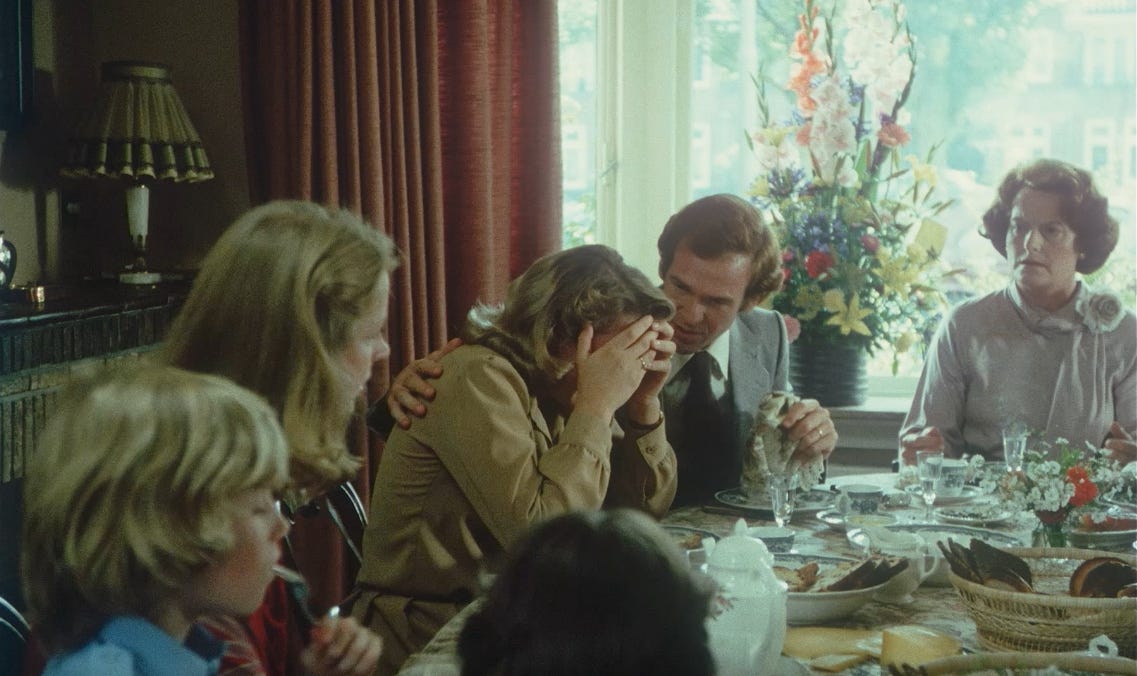
Ad thinks he’s solved Eve’s problems by sending her on a trip, but instead, she returns to the Netherlands as a feminist, and Ad isn’t too happy with that. She sets out to organize her friends and neighbors into a chore-sharing collective, sort of like the commune, and Ad wonders when dinner will be served. She tries to take more time for herself, learning French as a hobby, and Ad accuses her of being selfish and not caring about her family.
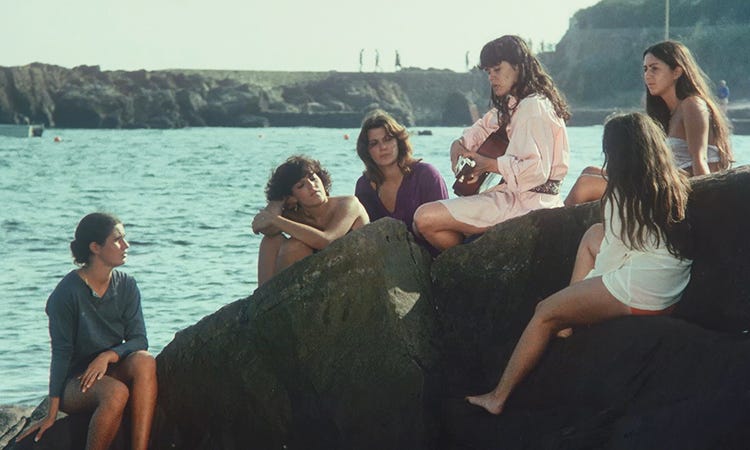
Eve goes to a feminist punk concert and hooks up with Liliane, who is in town for a women’s festival. Liliane spends the night (on the couch), and during breakfast, Ad makes fun of her for being a vegetarian. Eve confesses to Ad that she’s in love with Liliane, and he thinks it’s funny, because experimenting with women is very trendy these days. Ad doesn’t know the half of it. Still upset with Eve for spending time outside of the house, Ad follows Eve to visit Liliane, and he witnesses them having sex. He no longer feels so happy-go-lucky about the situation. In fact, he goes ballistic. He gets drunk at their son’s birthday party, screaming at Eve in front of everyone and declaring, “My wife isn’t a woman but a dyke.”
Eve does actually abandon her family at this point, going to stay with Liliane at the commune for several months. The women walk around with their tops off and debate the ethical concerns of child-rearing. But Eve can’t stay forever, because she misses her children, so she returns home. She won’t move back in with Ad, though, because, as she puts it, “You can’t stop an avalanche halfway.” Eve has seen the light, and she won’t return to the dark ages.
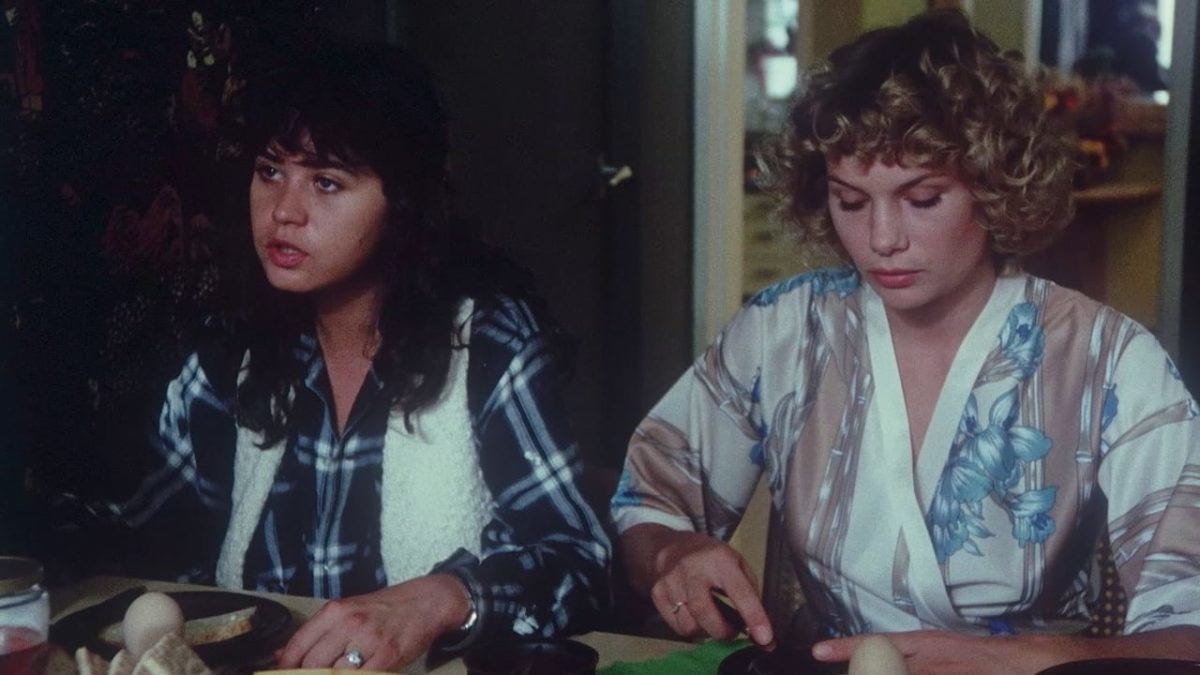
Ad and Eve begin divorce proceedings, at which point the film becomes legible as a divorce drama. Though Ad claims he’s being discriminated against because he’s a man and begins hurling vitriol at Eve during their court session, the judge grants Eve custody of the children, and they come to live on her quaint Dutch houseboat. Liliane is there too, sometimes, though she doesn’t care much for children. They go on a picturesque picnic with the kids and one of their other lesbian friends, and everyone frolics naked in the field. It’s all very bucolic, like an old painting.
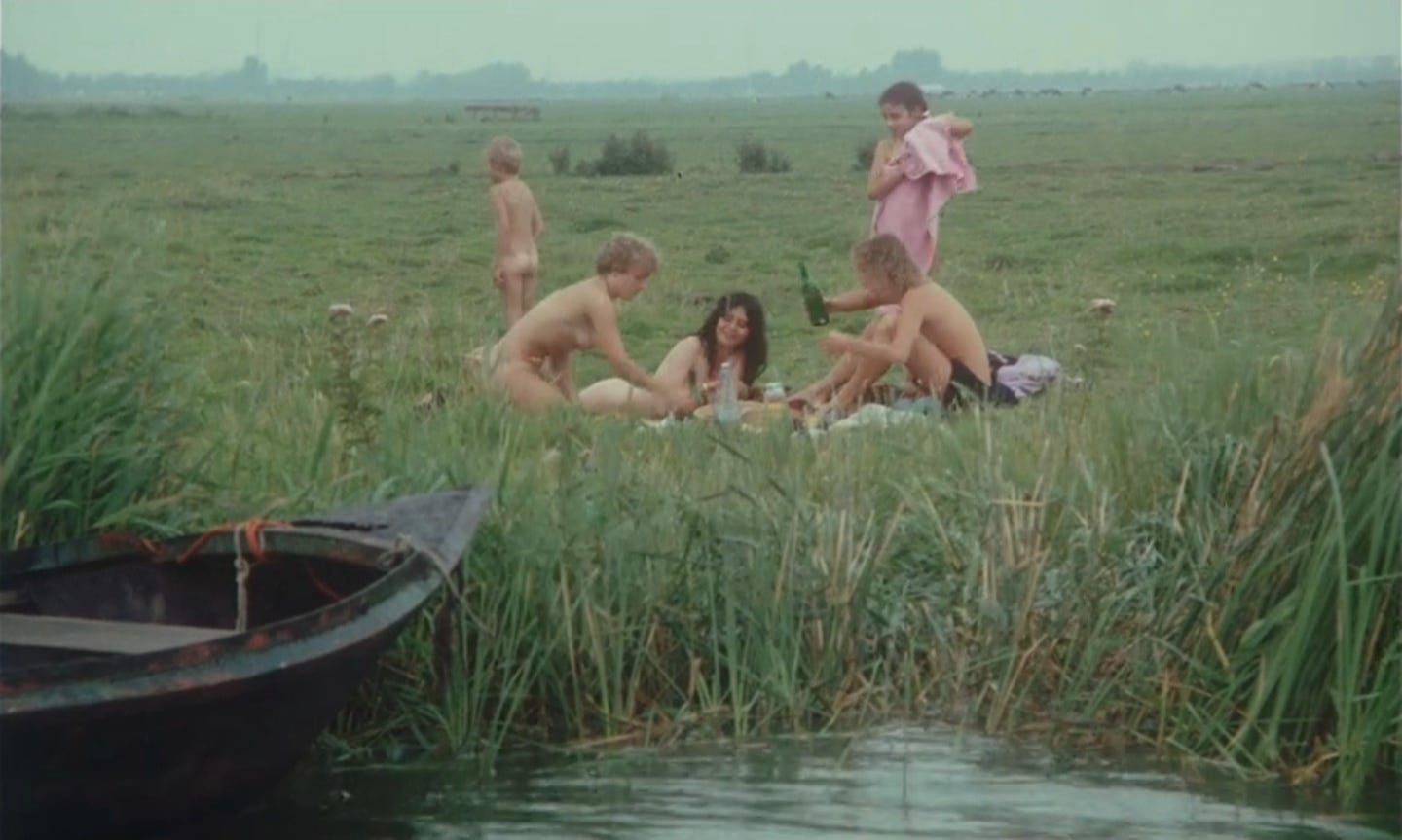
They eventually get kicked out of paradise, as Ad announces he’s engaged to Sonja (that traitor!), and the judge grants him custody of the kids since they will once again have a mother and a father in the home. Eve’s impassioned speech about how her sexual orientation doesn’t affect her ability to parent doesn’t get her anywhere this time around. Having lost her children, Eve decides to join Liliane on the commune for the foreseeable future, only to change her mind at the last minute, presumably so she can stay close to the kids.
A Woman Like Eve eventually made its way to the United States, screening at film festivals and arthouse cinemas. Reviews were mixed. Writing in the Bay Area Reporter, Michael Lasky noted that while the film has several redeeming qualities, it is “intermittently cliche bound.” He suggests, rightly, I might add, that the film spends too much time following the reactions to Eve’s transgression, particularly that of her intolerant and increasingly vociferous husband. Indeed, the film is at its best when it zooms in on Eve’s personal journey, and Van De Ven’s sympathetic performance carries the film in its less effective moments.

In an issue of Jump Cut from 1984, Lisa DiCaprio compares the film to Liana, John Sayles’ lesbian film from 1983. She’s critical of Liana, which she argues portrays the title character’s foray into lesbianism with no real conflict or consequences. In A Woman Like Eve, the consequences are the point. The film “emphasizes the painful choices that society forces on lesbians, especially on lesbian mothers,” she writes. “It provides us with an engaging drama which illustrates in a compelling way how the dynamics of a lesbian relationship are shaped by the harsh realities of a deeply homophobic society,” she continues. While Ad’s explosive, overblown reactions to Eve’s lesbianism become tiring, the film does an admirable job of even-handedly depicting the obstacles Eve and Liliane face.
Lesbian author Sarah Schulman was not a fan of the film when she saw it in 1986 at the 7th annual New York Gay Film Festival. In a short blurb in Gay Community News, Schulman criticized A Woman Like Eve and that year’s slate of lesbian films for their portrayal of “conventional narratives usually built around relationships instead of a lesbian sensibility.” She also declares it “perhaps Maria Schneider’s worst performance on screen.” (To be fair, Schneider’s performance is pretty wooden, especially when compared to Van De Ven’s much more energized work.) Writing in the University of California, Santa Cruz’s newspaper, City on a Hill, Sharan Street argued that the film’s depiction of the feminist movement and feminist issues appears outdated and old hat, and suggested that it relies more on ideas than feelings.

Ultimately, despite several imperfections, A Woman Like Eve paints a compelling portrait of the struggle for lesbian empowerment during second-wave feminism. It adheres to conventions yet finds a fairly radical vantage point within this familiar narrative structure. In many ways, A Woman Like Eve follows the blueprint of a typical divorce story. It came out in the same year as Kramer vs. Kramer, perhaps the most famous divorce movie of all (overtaken in recent years by Marriage Story).
The films have a lot in common. In Kramer vs. Kramer, Meryl Streep’s character leaves Dustin Hoffman because she decides she wants more from life than being a wife and mother. Hoffman, who has spent much of his son’s life working, learns how to be a father and resents his wife for neglecting her duties. Ultimately, because we stay with Hoffman for most of the film, Kramer vs. Kramer winds up more sympathetic towards the husband than the wife. (In some ways, Marriage Story follows a similar trajectory.)
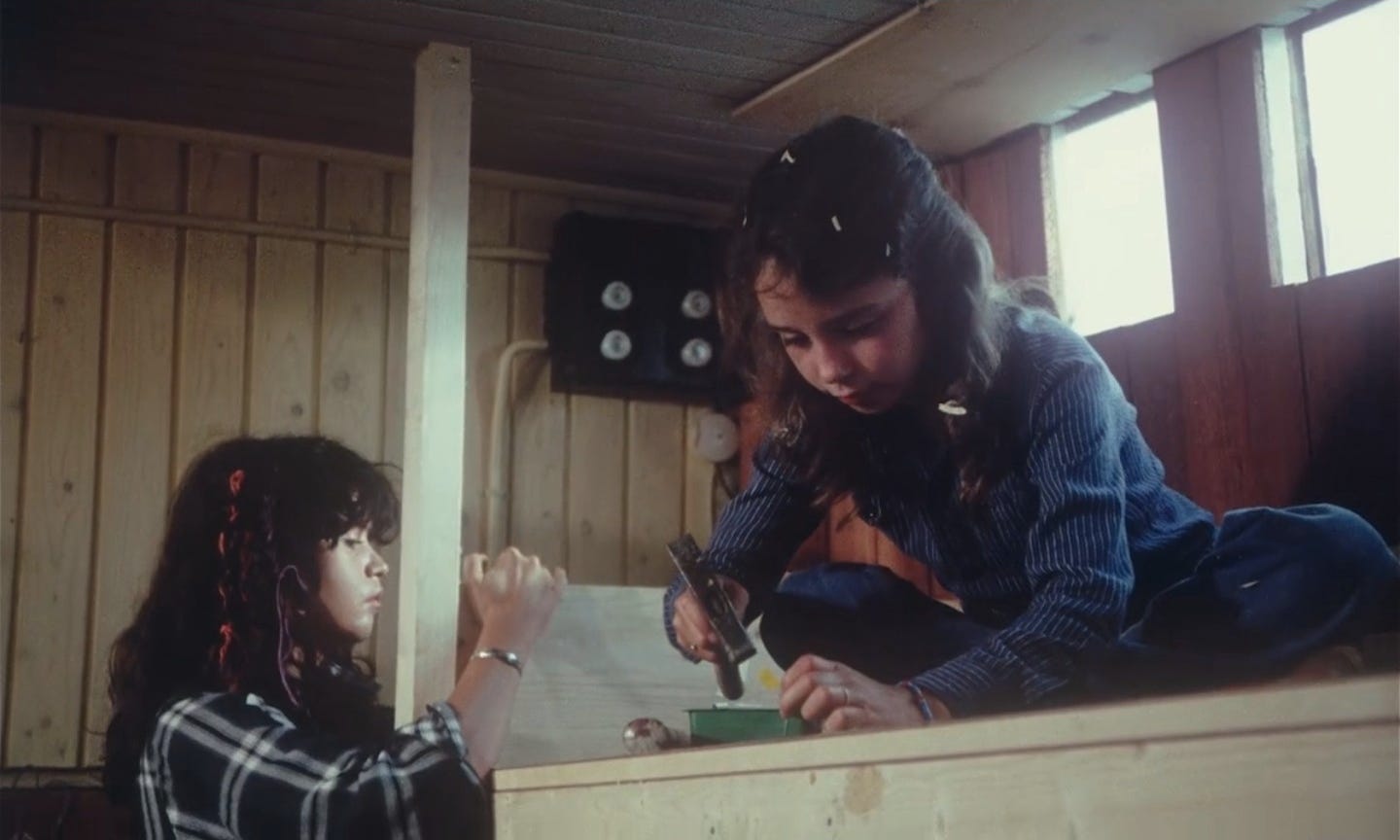
In A Woman Like Eve, our sympathies remain with Eve throughout, with little room for argument. Still, the film acknowledges that Eve’s actions have probably hurt her children, as unfair as her situation may be. Though A Woman Like Eve goes through the motions of a divorce drama and ends with Eve losing custody of her children, her commitment to nonconformity feels radical. Still, it’s far from the only film to depict the difficulties of lesbian mothers. The title character’s custody battle features prominently in Carol (if not the child herself), and films like Two Mothers For Zachary tackle real-life custody battles. Carol makes a similar argument as Eve, maintaining that she’s no use to her daughter if she’s “living against [her] own grain.”
It’s just fine that Eve’s relationship with Liliane never takes front and center, because it frames Eve’s destruction of her marriage as a personal choice rather than something that’s out of her control, ie, the power of love. It’s more about awareness than about love. En route to their sunny family picnic, Eve relays the story of Adam and Eve to her children, explaining how the pair were kicked out of paradise once Eve tasted the forbidden fruit. (Liliane plays the role of Lilith in this story, though Eve leaves that part out.)
Eve can’t return to the garden — a conventional heterosexual marriage — whether Lilith (Liliane) is by her side or not. Her lesbian feminist awakening is messy and imperfect, and there are casualties, but her empowerment is worth the price.
fujoshis in new york magazine

a new piece in vulture about heated rivalry has people debating the ethics of discussing niche fandoms like fujoshis in the mainstream. what's the right thing? plus, this month's playlist.