

Is 'Forbidden Fruits' Gay Enough?
Dr. Lesbian and TikTok weighs in

This is the Sunday Edition of Paging Dr. Lesbian, an AI-free, self-funded, queer media project. If you’d like to support my work as a full-time journalist in an increasingly unstable industry, please consider upgrading your subscription. It will get you weekly news updates, a monthly playlist, and a free sticker. Mild spoilers ahead.
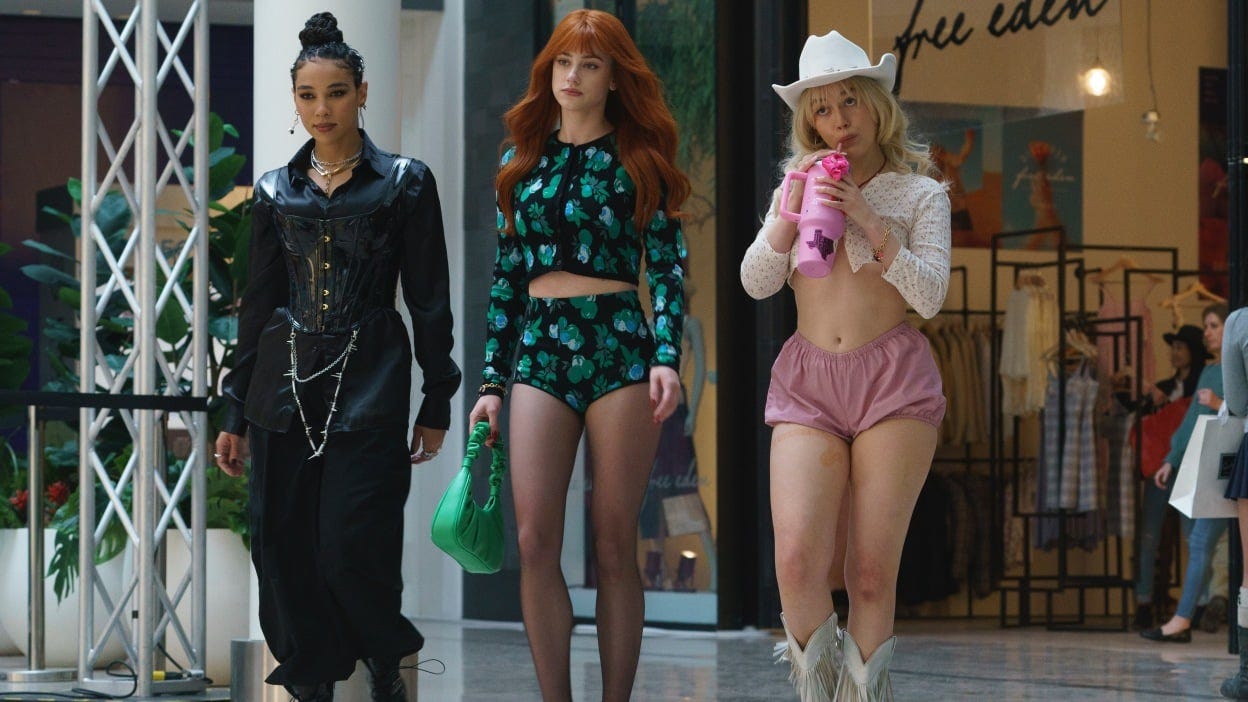
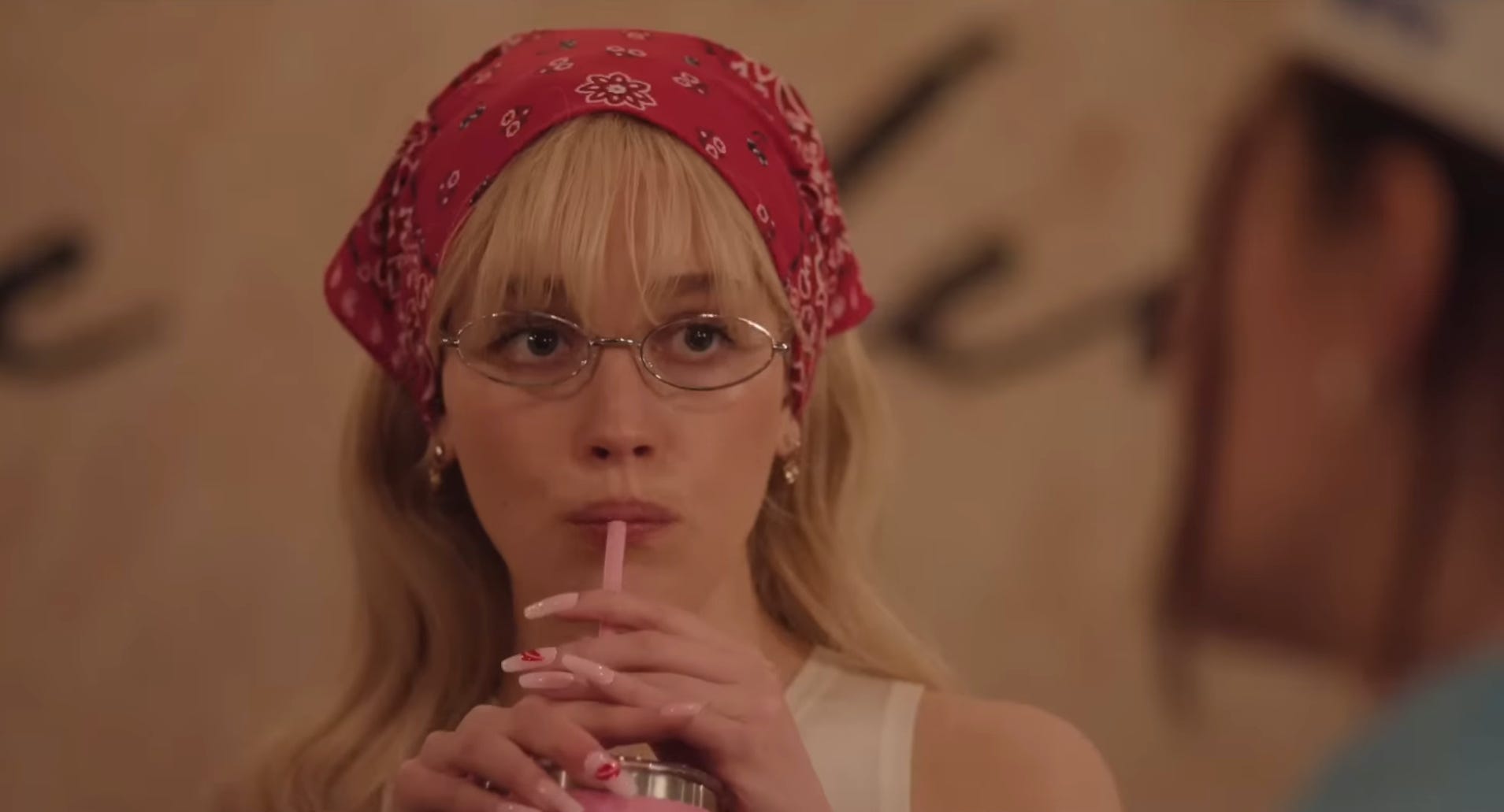
Forbidden Fruits is a film that wears its references on its sleeve. Directed by Meredith Alloway and based on a stage play by Lily Houghton, it follows four young women who work at a clothing store in a mall. Apple (Lili Reinhart), the ringleader of the group, runs Free Eden like she’s in the Navy alongside her two disciples, Cherry (Victoria Pedretti) and Fig (Alexandra Shipp). When a new girl, Pumpkin (Lola Tung), starts working at the store, they adopt her into their witchy cult.
The film, which Diablo Cody produced, was inspired by Jennifer’s Body, the queer cult classic that satirizes girlhood as a demonic hellscape. Mean Girls is another clear inspiration (Forbidden Fruits was actually filmed in the Mean Girls mall), with its cliquish attitudes and quotable catchphrases. The film’s witchy elements harken back to The Craft, in which magic is both a metaphor for power and an entry point for twisted sisterhood. Forbidden Fruits cleverly updates these references for the 2020s, creating a compelling visual and linguistic landscape that resonates on the big screen as much as it does in TikTok edits.
Reviews have been mixed, though trending positive. Chris Azzopardi of The New York Times decried its “vibes-only pastiche,” while Variety’s Owen Gleiberman called it an “agreeably sharp-witted black-as-midnight comedy.” In IndieWire, Alison Foreman looked at the film from another angle, questioning its marketing as an “instant cult classic.” She argues that the phrase is a “contradiction in terms,” because films only emerge as cult classics over time, after an initial period of misunderstanding or a lackluster box office performance. She also makes a salient point about expectations, noting that “When female-driven, queer-coded, or subculture-centered stories are immediately framed as ‘cult,’ it can also imply an invisible ceiling.”
We could discuss the meaning of a cult classic further, but we have more pressing matters to attend to. Namely, one very important question: Is the movie gay? After we saw the film, a friend sent me a TikTok that said “there is no scissoring in forbidden fruits i repeat there is NO scissoring in forbidden fruits” set to sad SpongeBob music. Commenters were dismayed, to say the least. “truly devastating news thank you for informing us.” “literally what do i do now.” “then what’s the point.” “will not be watching then, thanks!”
There is indeed no scissoring in Forbidden Fruits, and any explicit queerness is minimal. But fans’ hope that Forbidden Fruits would be queer didn’t come from nowhere. In fact, the film’s official Instagram account posted a video of Reinhart and Pedretti almost kissing, only for Pedretti to pull away and mouth to an audio clip saying “you’re gay.” “go see forbidden fruits this weekend for more of this,” the captain reads. Sadly, there is not much “more of this” in the film.
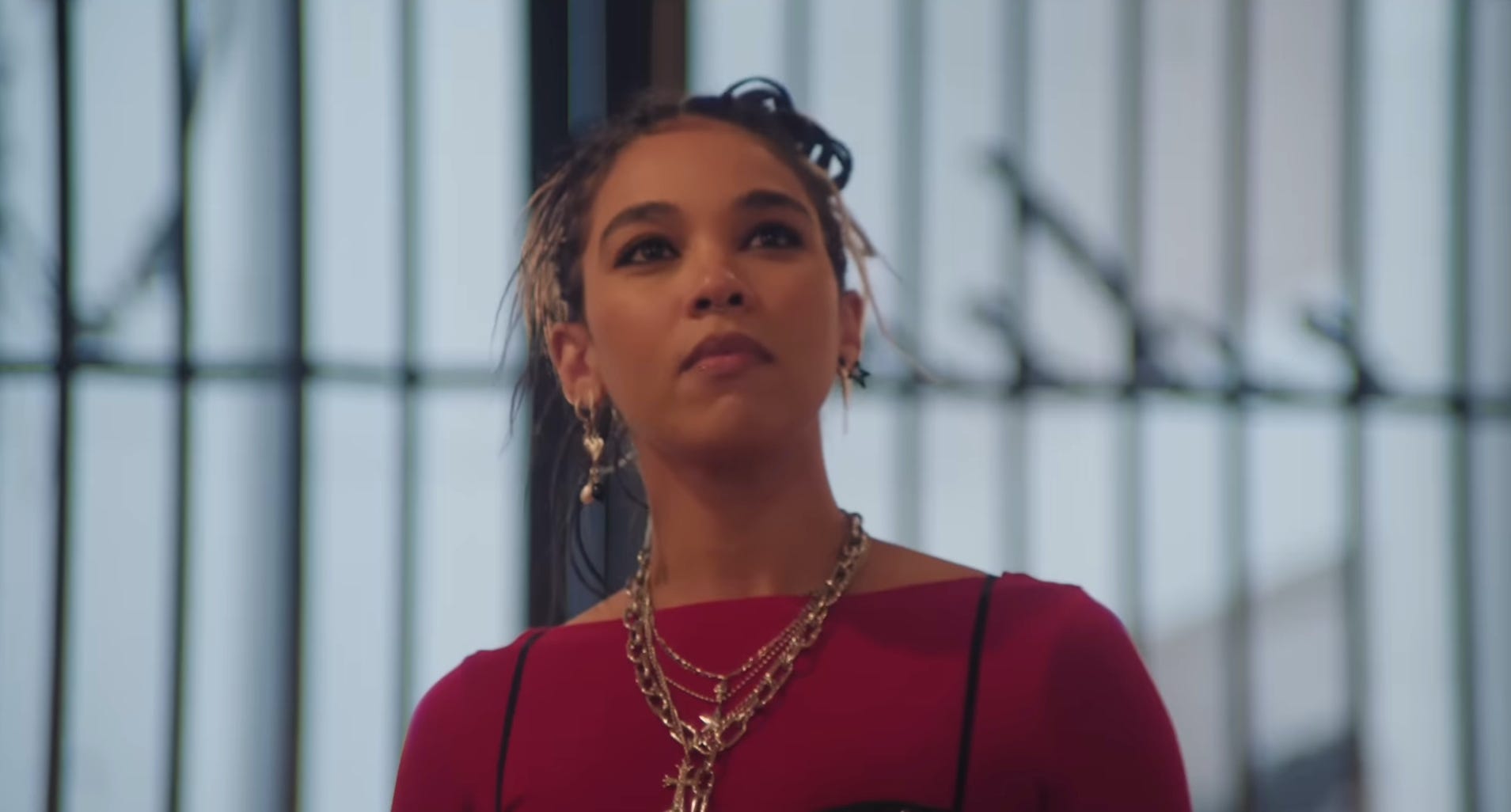
Initially, Forbidden Fruits seems to imply an undercurrent of queer flirtation between Fig and Pumpkin. Fig is immediately taken with Pumpkin, and the two share a sweet kinship. However, the flirtation goes nowhere, and Fig’s secret boyfriend becomes problematic. Apple and Cherry have their own unique dynamic. Apple keeps Cherry on a tight leash, maintaining her sobriety and admonishing her for her “main character” energy. Later in the film, Apple suddenly kisses Cherry, but Cherry pushes her away. We might assume that Apple has been harboring secret queer feelings for Cherry, but it’s never explored any further. (Later events indicate that Apple’s care for Cherry only goes so far.)
Let’s compare it to some of its references. In Jennifer’s Body, Needy (Amanda Seyfried) and Jennifer’s (Megan Fox) friendship is clearly homoerotic. Lines like Jennifer’s “God, you’re butch,” and their sexually charged kiss illustrate a strong undercurrent of sexual tension that runs through the entire film. In this case, these protagonists’ “complicated female friendship” includes gay feelings. Forbidden Fruits, on the other hand, only briefly stokes this possibility. Reflecting the adolescent language of its era, in Mean Girls, being called a lesbian is an insult. The reboot tries to move past this high school prejudice, with mixed results. Meanwhile, in The Craft, queerness is reserved for outsiders and weirdos.
![Pride 2020] Finding Jennifer; Or, How I Learned to Stop Hating Jennifer's Body — Gayly Dreadful -- Bursting out of your closet with the latest horror reviews](https://substackcdn.com/image/fetch/$s_!Bt91!,f_auto,q_auto:good,fl_progressive:steep/https%3A%2F%2Fsubstack-post-media.s3.amazonaws.com%2Fpublic%2Fimages%2F253f400e-f879-41e4-9017-8a2267230e64_1278x687.webp "Pride 2020] Finding Jennifer; Or, How I Learned to Stop Hating Jennifer's Body — Gayly Dreadful -- Bursting out of your closet with the latest horror reviews")
Despite the ambiguous, often toxic nature of their relationship, some sapphic viewers have latched on to the pairing between Apple and Cherry, creating shaky fancams of their most dramatic moments. Pedretti’s loyal queer following, thanks to her roles in projects like The Haunting of Hill House and The Haunting of Bly Manor, certainly adds to the excitement. But while Apple (and perhaps Cherry) being queer is an intriguing angle, it doesn’t feel earned, and the kiss fails to leave a major impact. It feels more like these are bits of queerness sprinkled in for fun, rather than a part of the movie’s fabric.
In an interview with Variety, director Meredith Alloway argued that while Apple may seem like the antagonist, it was the patriarchy all along. “The villain is expectations of women,” she explained. “It’s capitalist systems. It’s quite literally the mall itself.” Her point is well-taken, but one wonders if this argument could have been strengthened if the film had deigned to critique the institution of heterosexuality as well, through a more explicit introduction of queerness. The film does a good job pulling its references into the 2020s, using Gen Z slang without it sounding cringe. But I’m left considering what it might have looked like had it included the concept of comphet (or compulsory heterosexuality), an internet-era expression of a Second Wave term. Putting queerness more squarely in the text could have pulled the film further into the future.
Still, though the aforementioned TikTok commenters might believe otherwise, the lack of scissoring in Forbidden Fruits doesn’t ruin the movie. It’s a good movie! The script is sharp and witty, the smart production design and costuming provide some amazing world-building, and the acting is top-notch. Reinhart and Pedretti are particularly impressive. Reinhart’s glacial gaze is deliciously cutting, and she pulls off the film’s biggest tonal swings. Pedretti makes her bimbo-esque character not only the funniest part of the film, but also gives her emotional depth. It’s a shame the film didn’t put queerness in the forefront (in a departure from its mostly queer-coded references), but an hour or two of laughs is worth a lot these days.
